2. Key Concepts
- Environmental racism
- Environmentalism
- Intersectional Environmentalism
- Environmental Justice
- Indigenous Environmental Justice
3. Prelim Engagement
1. Why do certain populations around the world have inequitable health outcomes? Is it genetics? By this point in the course you should be shouting "No!" But if not genetics, what? Environmental racism is one determinant of poor social determinants of health which contribute to inequitable negative health outcomes for certain populations. Watch this video to learn more.
2. But how did we even get to environmental racism? Environmental racism is a consequence of deeper, structural determinants of health: internalized racist beliefs or a simple disregard for inequity that resulted in and continues to result in policies and practices which benefit some to the detriment of others. This video clip offers an example of how historical and structural determinants of health at the root of environmental racism.
3. So, how do we fight these inequities related to environmental health? Environmental justice movements around the world have been working at the intersection of environment, inequity, health and justice for decades.
Environment, humans, disparities and health
To start our discussion about environmental racism, let’s think back to when we talked about the relationships between neighborhood, wealth and life expectancy in the city of Chicago.
Do you remember the map below?

Darker areas indicate lower life expectancy.
Source: Joint Center for Political and Economic Studies Health Policy Institute (2012).
Remember that this map is from a study in 2012 that found that from 2003-2007 life expectancy in the city of Chicago varied greatly depending on zip code and income (Joint Center for Political and Economic Studies Health Policy Institute, 2012).
The darker areas indicate neighborhoods where residents were not expected to live beyond the age of 70 years; in the lighter areas residents are expected to live up to 90 years. The residents in the south, southeast and west of the city predominantly identify as African American and Latinx.
This same study found that people living in communities in the city of Chicago with a median income higher than $53,000 had a life expectancy up to 14 years longer than people living in Chicago communities with a median income below $25,000. We also learned that data from 2010-2015 showed a 30 year life expectancy gap between Chicago neighborhoods in the north and downtown and the southeast and west (Schnecker, 2019).
In this section of reading we want to view environmental health through a determinants of health lens — taking the knowledge you now have about the health consequences of negative historical, structural and social determinants of health for particular populations and understand how environmental racism is a determinant of health.
How do you think the map above and the statistics about differences in life expectancy in the city of Chicago could also intersect with environmental health?
Let’s use ambient (atmospheric) air pollution, which you discussed in the last section, as an example.
Do you think that in the poorest neighborhoods of Chicago with predominantly Black and Hispanic residents ambient air pollution is greater or less than ambient air pollution in, say, the neighborhoods of the Loop? What about Chicago’s north side neighborhoods, which tend to be predominantly white?
If you think that air pollution can be mapped to poverty and race in the city of Chicago (and other urban settings as well) you are correct.
Check out the map below from the Natural Resources Defense Council (2018).
The orange and red areas indicate neighborhoods in the city of Chicago with higher exposure to air pollution.
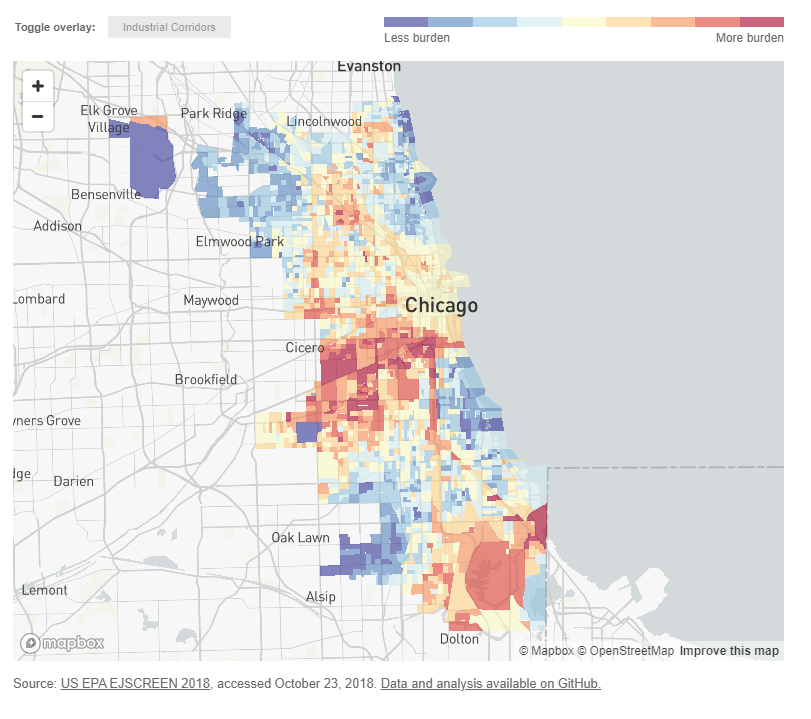
Now, think of some health consequences you learned about related to exposure to ambient air pollution. Did asthma come to mind?
Do you see where this narrative is going now?
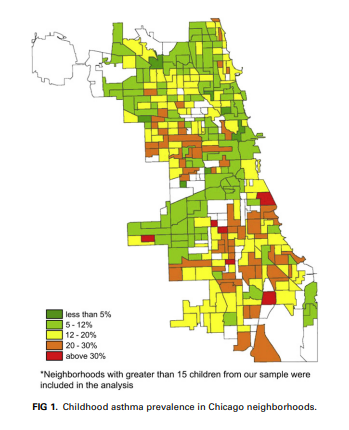
As the map from a study by Gupta and colleagues (2008) shows below, from 2003-2005 the highest rates of childhood asthma in the city of Chicago (represented by orange and red on the map) were predominantly found in Chicago’s South and West side neighborhoods.
So what does this mean?
Some might say that Black and Hispanic populations in America are simply ‘more prone’ to asthma genetically.
Now that you know more about the historical, structural and social determinants of health, how would you respond to that comment? Do you think certain races and ethnicities are simply more likely to develop asthma because of their genes?
At this point in the course, you should be able to counter this argument from a number of perspectives — first and foremost, that we know that there is almost no genetic variation between races, and that there is a significant amount of genetic variation within races (Chou and Utter, 2017). Second, we know that ethnicity has nothing to do with genetics — it is a socio-cultural identity. Then, you can move onto which factors are actually responsible for health outcomes.
Let’s look at these images all together.
Life Expectancy by Census Tract and Municipality, Cook County and Chicago (2003-2007)
Darker areas indicate lower life expectancy.
Source: Joint Center for Political and Economic Studies Health Policy Institute (2012).
This is not just a visual. Chase and Judge report that studies from 2018 confirmed that “Chicagoans in minority neighborhoods on the West and South Sides have the greatest exposure to toxic air pollution and other environmental health hazards in the city.”
Misra (2017) also reports that:
Asthma is a lifelong affliction—crippling and expensive to manage. But it doesn’t affect everyone the same. The disease is much more prevalent among black and Puerto Rican children.
A new working paper, published in the National Bureau of Economic Research, demonstrates that it’s the characteristics of places, not people, that are largely responsible for that disparity. So while a slew of related factors—income and education, birthweight, disparate access to health care—play a role in the prevalence of asthma, they may often be a reflection of where a person lives.
The intersection of these factors — neighborhood, race, income, and health outcomes — is not a coincidence. Also, these intersecting factors and resulting negative health consequences are unfortunately not limited to asthma and not limited to the city of Chicago.
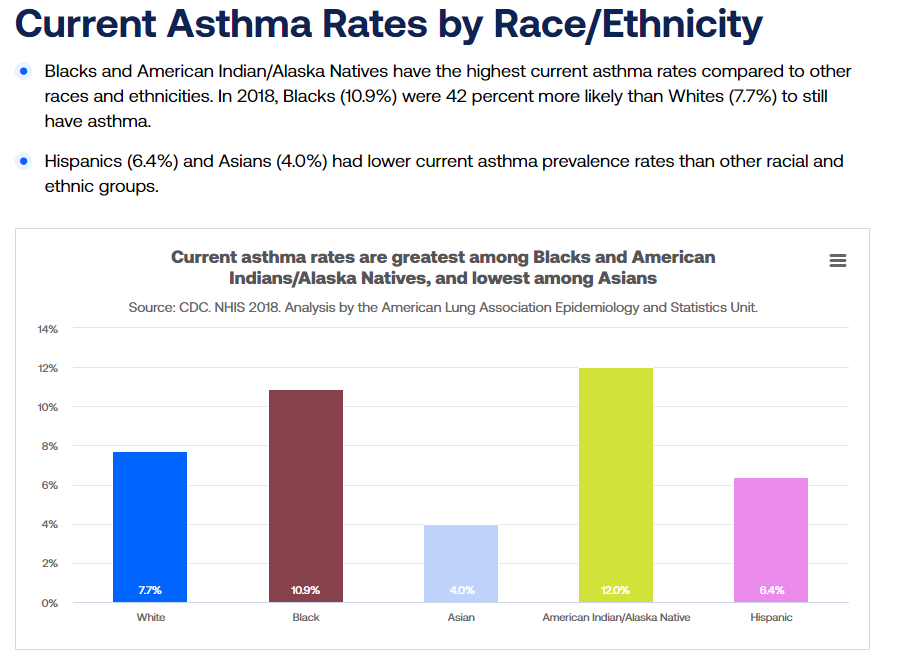
Environmental racism is a determinant of health that affects individuals, households and communities in urban and rural environments around the world, causing differences in quality of life and health outcomes which are:
- Unfair
- Unjust
- Unavoidable.
In short, environmental racism as a determinant of health leads to health inequities and health disparities.
Defining environmental racism
The following section adapted from (Open Stax, n.d.)
All of this talk about environmental racism — but what exactly does that mean?
Environmental racism refers to the way in which minority group neighborhoods (populated primarily by people of color and members of low socioeconomic groups) are burdened with a disproportionate number of hazards, including toxic waste facilities, garbage dumps, and other sources of environmental pollution and foul odors that lower the quality of life.
Open Stax, n.d.
All around the globe, members of minority groups, including Indigenous people, bear a greater burden of the health problems that result from higher exposure to waste and pollution. This can occur due to unsafe or unhealthy work conditions where no regulations exist (or are enforced) for poor workers, or in neighborhoods that are uncomfortably close to toxic materials.
Watch these two short clips for definitions and examples of environmental racism.
The statistics on environmental racism are shocking.
Research shows that it pervades all aspects of African Americans’ and other minority populations’ lives: environmentally unsound housing, schools with asbestos problems, facilities and playgrounds with lead paint, air and water pollution.
A twenty-year comparative study led by sociologist Robert Bullard determined “race to be more important than socioeconomic status in predicting the location of the nation’s commercial hazardous waste facilities” (Bullard et al. 2007). His research found, for example, that African American children are five times more likely to have lead poisoning (the leading environmental health threat for children) than their Caucasian counterparts, and that a disproportionate number of people of color reside in areas with hazardous waste facilities (Bullard et al. 2007). Sociologists with the project are examining how environmental racism is addressed in the long-term cleanup of the environmental disasters caused by Hurricane Katrina.
Why does environmental racism exist? The reason is simple. Those with resources can raise awareness, money, and public attention to ensure that their communities are unsullied. This has led to an inequitable distribution of environmental burdens. Another method of keeping this inequity alive is Not in My Backyard (NIMBY) protests. Chemical plants, airports, landfills, and other municipal or corporate projects are often the subject of NIMBY demonstrations. And equally often, the NIMBYists win, and the objectionable project is moved closer to those who have fewer resources to fight it.
Watch this clip to learn more about the historical determinants of health which have affected structural and, therefore, social determinants of health related to environmental health in the United States.
Native American communities and environmental racism
Native Americans and other Indigenous people are also unquestionably victims of environmental racism. The Commission for Racial Justice found that about 50 percent of all American Indians live in communities with uncontrolled hazardous waste sites (Asian Pacific Environmental Network 2002). There’s no question that, worldwide, Indigenous populations are suffering from similar fates.
For Native American tribes, the issues can be complicated—and their solutions hard to attain—because of the complicated governmental issues arising from a history of institutionalized disenfranchisement. Unlike other racial minorities in the United States, Native American tribes are sovereign nations. However, much of their land is held in “trust,” meaning that “the federal government holds title to the land in trust on behalf of the tribe” (Bureau of Indian Affairs 2012). Some instances of environmental damage arise from this crossover, where the U.S. government’s title has meant it acts without approval of the tribal government. Other significant contributors to environmental racism as experienced by tribes are forcible removal and burdensome red tape to receive the same reparation benefits afforded to non-Indians.
To better understand how this happens, let’s consider a few example cases. The home of the Skull Valley Band of Goshute Indians was targeted as the site for a high-level nuclear waste dumping ground, amid allegations of a payoff of as high as $200 million (Kamps 2001). Keith Lewis, an Indigenous advocate for Indian rights, commented on this buyout, after his people endured decades of uranium contamination, saying that “there is nothing moral about tempting a starving man with money” (Kamps 2001).
In another example, the Western Shoshone’s Yucca Mountain area has been pursued by mining companies for its rich uranium stores, a threat that adds to the existing radiation exposure this area suffers from U.S. and British nuclear bomb testing (Environmental Justice Case Studies 2004). In the “four corners” area where Colorado, Utah, Arizona, and New Mexico meet, a group of Hopi and Navajo families have been forcibly removed from their homes so the land could be mined by the Peabody Mining Company for coal valued at $10 billion (American Indian Cultural Support 2006). Years of uranium mining on the lands of the Navajo of New Mexico have led to serious health consequences, and reparations have been difficult to secure; in addition to the loss of life, people’s homes and other facilities have been contaminated (Frosch 2009).
In yet another case, members of the Chippewa near White Pine, Michigan, were unable to stop the transport of hazardous sulfuric acid across reservation lands, but their activism helped bring an end to the mining project that used the acid (Environmental Justice Case Studies 2004).
These examples are only a few of the hundreds of incidents that American Indian tribes have faced and continue to battle against. Sadly, the mistreatment of the land’s original inhabitants continues via this institution of environmental racism.
Environmental racism can be understood on local and global levels. Around the world, low- and middle-income countries are exploited and polluted by corporations and governments which have no accountability to local populations. Minority groups and communities within those countries also often bear the brunt of environmental degradation. Environmental racism is a global problem with global consequences for health outcomes.
From preservation to Justice: Environmentalism and the advent of the Environmental Justice Movement globally
Environmentalism: humans versus nature
The following section (verbatim) is attributed to (Elliot, n.d.).
When you think of the idea of environmental health, does the term environmentalism come to mind?
Concern for the impact on human life of problems such as air and water pollution dates to at least Roman times. Pollution was associated with the spread of epidemic disease in Europe between the late 14th century and the mid-16th century, and soil conservation was practiced in China, India, and Peru as early as 2,000 years ago. In general, however, such concerns did not give rise to public activism.
The contemporary environmental movement — environmentalism — arose primarily from concerns in the late 19th century about the protection of the countryside in Europe and the wilderness in the United States and the health consequences of pollution during the Industrial Revolution. In opposition to the dominant political philosophy of the time, liberalism—which held that all social problems, including environmental ones, could and should be solved through the free market—most early environmentalists believed that government rather than the market should be charged with protecting the environment and ensuring the conservation of resources. An early philosophy of resource conservation was developed by Gifford Pinchot (1865–1946), the first chief of the U.S. Forest Service, for whom conservation represented the wise and efficient use of resources.
Also in the United States at about the same time, a more strongly biocentric approach arose in the preservationist philosophy of John Muir (1838–1914), founder of the Sierra Club, and Aldo Leopold (1887–1948), a professor of wildlife management who was pivotal in the designation of Gila National Forest in New Mexico in 1924 as America’s first national wilderness area. Leopold introduced the concept of a land ethic, arguing that humans should transform themselves from conquerors of nature into citizens of it; his essays, compiled posthumously in A Sand County Almanac (1949), had a significant influence on later biocentric environmentalists.
Environmental organizations established from the late 19th to the mid-20th century were primarily middle-class lobbying groups concerned with nature conservation, wildlife protection, and the pollution that arose from industrial development and urbanization. There were also scientific organizations concerned with natural history and with biological aspects of conservation efforts (Elliot, n.d.).
Environmental Justice: Centering people, environment and equity
The following section adapted from (Dorsner, n.d.)
Even though many people associate the term environmentalism with fighting environmental injustices that can lead to poor human health, environmentalism and environmental justice are two very distinct movements with very different histories.
Environmental Justice is defined as the fair treatment and meaningful involvement of all people regardless of race, color, national origin, or income with respect to the development, implementation, and enforcement of environmental laws, regulations, and policies. It will be achieved when everyone enjoys the same degree of protection from environmental and health hazards and equal access to the decision-making process to have a healthy environment in which to live, learn, and work.
The CDC defines environmental justice as “All people—regardless of race, color, national origin, or income—are entitled to equal protection from environmental and health hazards and equal access to the development, implementation, and enforcement of environmental laws, regulations, and policies.” (CDC, 2021).
Can you already distinguish some of the differences between environmentalism and environmental justice?
Environmental justice: a history
During the 1980’s minority groups protested that hazardous waste sites were preferentially sited in minority neighborhoods. In 1987, Benjamin Chavis of the United Church of Christ Commission for Racism and Justice coined the term environmental racism to describe such a practice. The charges generally failed to consider whether the facility or the demography of the area came first. Most hazardous waste sites are located on property that was used as disposal sites long before modern facilities and disposal methods were available. Areas around such sites are typically depressed economically, often as a result of past disposal activities. Persons with low incomes are often constrained to live in such undesirable, but affordable, areas. The problem more likely resulted from one of insensitivity rather than racism. Indeed, the ethnic makeup of potential disposal facilities was most likely not considered when the sites were chosen.
Decisions in citing hazardous waste facilities are generally made on the basis of economics, geological suitability and the political climate. For example, a site must have a soil type and geological profile that prevents hazardous materials from moving into local aquifers. The cost of land is also an important consideration. The high cost of buying land would make it economically unfeasible to build a hazardous waste site in Beverly Hills. Some communities have seen a hazardous waste facility as a way of improving their local economy and quality of life. Emelle County, Alabama had illiteracy and infant mortality rates that were among the highest in the nation. A landfill constructed there provided jobs and revenue that ultimately helped to reduce both figures.
In an ideal world, there would be no hazardous waste facilities, but we do not (yet!) live in an ideal world. Unfortunately, we live in a world plagued by rampant pollution and dumping of hazardous waste. Our industrialized society has necessarily produced wastes during the manufacture of products for our basic needs. Until technology can find a way to manage (or eliminate) hazardous waste, disposal facilities will be necessary to protect both humans and the environment. By the same token, this problem must be addressed. Industry and society must become more socially sensitive in the selection of future hazardous waste sites. All humans who help produce hazardous wastes must share the burden of dealing with those wastes, not just the poor and minorities (Dorsner K, n.d.)
Distinguishing Environmental Justice from Environmentalism
While activists in the environmentalist movement have achieved incredibly important environmental protections and preservation of some of the most beautiful and essential lands populations around the world enjoy today, it is also necessary to reflect on how environmentalism and the environmental justice movement differ — and trace the history of environmentalism which does include injustice and inequity.
These injustices and inequalities include violations of Indigenous peoples’ rights and the framing of environmental degradation as problems caused by populations in low- and middle-income countries.
The image below outlines some of the most basic differences between environmentalism and the environmental justice movement.
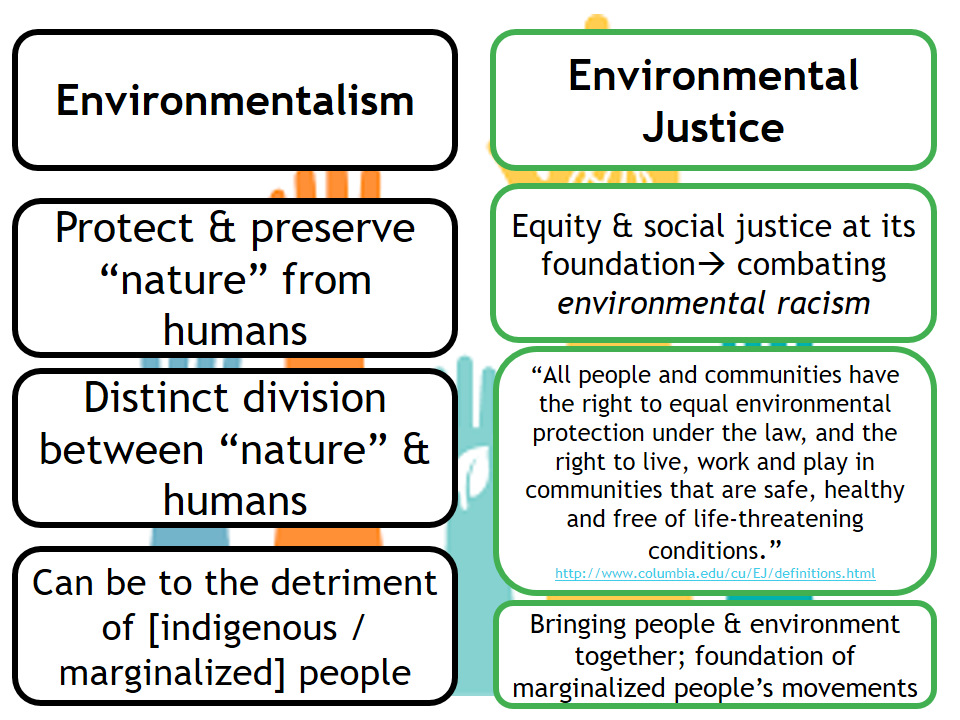
Environmentalism vs. Environmental Justice
(Schlangen, 2020)
Environmentalism has spent decades tirelessly advocating for the protection of our environment. From supporting National Parks to protecting endangered species, the movement has created upward momentum for environmental action. Environmentalism, however, has a history rooted in racism that we must recognize.
The Sierra Club, which is an established environmentalism group, began as a club for white men (and occasionally women), to explore the Pacific Coast. One of their agendas pressured the U.S. government to protect specific landscapes in the United States by turning them into national parks.
National parks made up the foundation for this movement that was largely led by white Americans. These parks continue to be viewed as quintessential to the American identity. However, environmentalism failed to recognize that many of these parks were on the ancestral lands of Indigenous people, who were forcibly removed from them.
The environmentalism movement held strong views about who should and shouldn’t be able to access the environment. By roping off sections of the land and charging people to see them, they created an accessibility gap. The natural environment became a privilege to access and the original stewards of this land were blocked out.
The environmentalism movement has also argued in the past that overpopulation poses one of the greatest threats to wildlife, mostly blaming lower-income communities. Many environmentalist agendas have centered the blame on poor, overpopulated communities around the world, arguing that urbanization harms the environment. However, it’s imperative to note that “the richest 10% of the world’s population produces almost as much greenhouse gas emissions as the bottom 90% combined.” Low-income and Indigenous communities are some of the best caretakers of the land around them.
Today, the environmentalism movement has begun taking steps to acknowledge their racists and classist beginning. The Sierra Club has recognized how it has upheld white supremacy and reckoned with their founder, John Muir’s, racist comments and actions. Today, the group has also supported the fight against social injustice by calling out oppressive systems in our society. After the wrongful murder of Jacob Blake this past August, The Sierra Club joined calls to defund the police and funnel that capital into support for Black communities.
The Environmental Justice Movement has been critical of environmentalism; specifically, the movement’s lack of mobility to racism and classism issues. In the past, environmentalism hasn’t made the connections between social issues and the environment. For example, the ones who contribute the most to climate change are the least likely to actually feel those impacts. The Environmental Justice Movement helps bridge the gaps between Environmentalism and Social Justice.
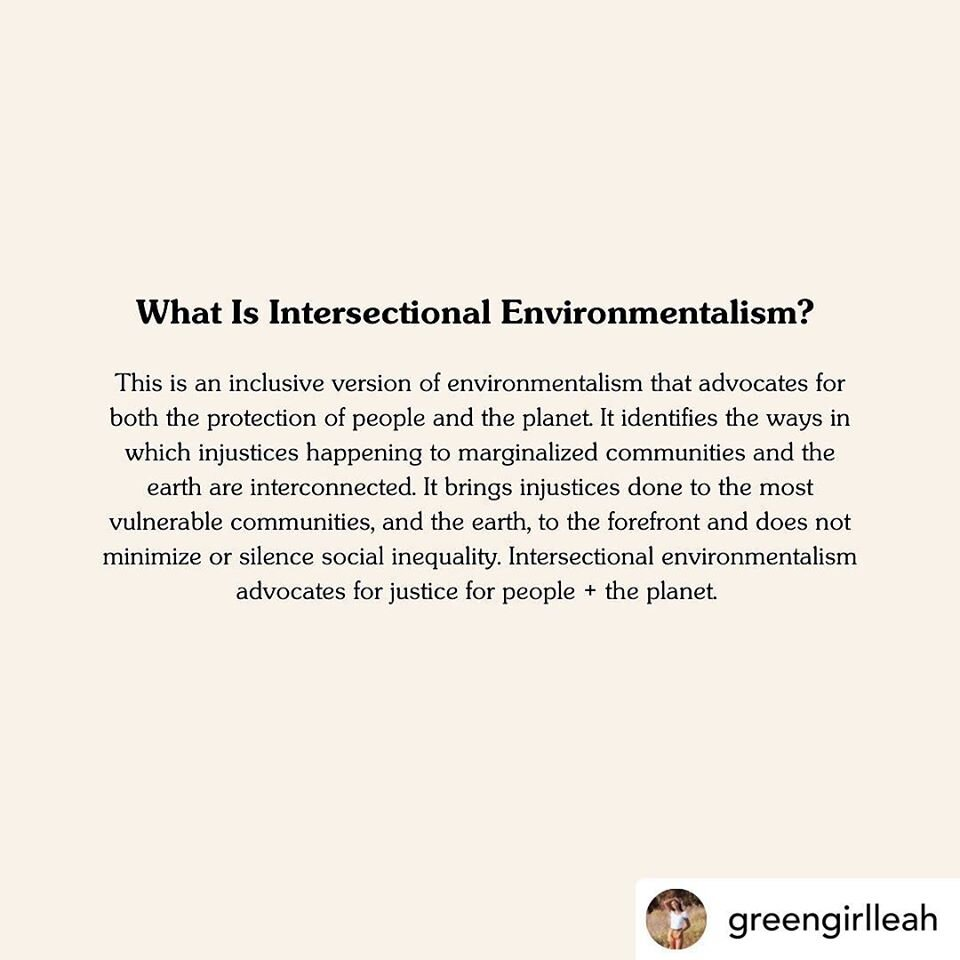
Environmental activist Leah Thomas coined the term “intersectional environmentalism” to describe a new branch of environmentalism that actively promotes justice for all. Thomas says that intersectional environmentalism “advocates for both the protection of people and the planet. It identifies the ways in which injustices happening to marginalized communities and the earth are interconnected.” Thomas created this movement after noticing the white-washed narratives that surrounded the movement while studying environmentalism in college. She applied the ideas from intersectional feminism to environmentalism to create a more-inclusive movement.
Although environmentalism and the Environmental Justice Movement differ, we need both of them. Both need to hold the other accountable for their goals and actions, especially because they’re not so different anymore. Environmentalism and Environmental Justice have acknowledged that climate change is one of our most pressing issues today, and that the effects of it disproportionately affect low-income communities and communities of color across the globe. This issue cannot be solved by one group or one idea. It will take all of us to make the changes necessary to protect our world. In order to move forward with action though, we must first acknowledge where we came from and who has been harmed in the process.
(Schlangen, 2020)
To learn more about how the environmentalism movement is slowly but surely taking up the causes of environmental justice, listen to this brief podcast (required):
Flint Water Crisis: A Turning Point for Environmental Justice
Environmental Justice and Indigenous Populations
The following section adapted from (Dorsner, n.d.)
Since the end of the 15th century, most of the world’s frontiers have been claimed and colonized by established nations. Invariably, these conquered frontiers were home to people indigenous to those regions. Some Indigenous populations were wiped out or assimilated by the colonizers, while others survived while trying to maintain their unique cultures and way of life.
The United Nations officially classifies Indigenous people as those “having an historical continuity with pre-invasion and pre-colonial societies,” and “consider themselves distinct from other sectors of the societies now prevailing in those territories or parts of them.” Furthermore, Indigenous people are “determined to preserve, develop and transmit to future generations, their ancestral territories, and their ethnic identity, as the basis of their continued existence as peoples in accordance with their own cultural patterns, social institutions and legal systems.” A few of the many groups of Indigenous people around the world are: the many tribes of Native Americans (i.e., Navajo, Sioux) in the contiguous 48 states, the Inuit of the arctic region from Siberia to Canada, the rainforest tribes in Brazil, and the Ainu of northern Japan.
Many problems face Indigenous people including the consistent refusal of local, national and global governments to protect Indigenous human rights, exploitation of Indigenous peoples’ traditional lands and their people, and degradation of Indigenous culture. In response to the problems faced by Indigenous people around the world, the United Nations proclaimed an “International Decade of the World’s Indigenous People” beginning in 1994. The main objective of this proclamation, according to the United Nations, is “the strengthening of international cooperation for the solution of problems faced by indigenous people in such areas as human rights, the environment, development, health, culture and education.” Its major goal is to protect the inherent rights of Indigenous people. Such protection would enable Indigenous communities around the world to preserve their cultural identity, such as their language and social customs, while still participating in the political, economic and social activities of the region in which they reside.
Despite the lofty U.N. goals, the rights and well-being of Indigenous people are often ignored or minimized, even by supposedly “culturally sensitive” countries and institutions. For example, in the United States many politicians in the federal and state governments are pushing to exploit oil resources in the Arctic National Wildlife Refuge on the northern coast of Alaska. The “Gwich’in,” an Indigenous people who rely culturally and spiritually on the herds of caribou that live in the region, claim that drilling in the region would devastate their way of life. Thousands of years of culture would be destroyed to supply oil and profit to those outside of this Indigenous community. Drilling efforts have been stymied in the past, but mostly out of concern for environmental factors (think ‘environmentalism’) and not necessarily the needs or perspectives of the Indigenous people to whom the land belongs. It is worth stating, however, that not all Indigenous communities agree — another group of Indigenous people, the “Inupiat Eskimo,” favor oil drilling in the Arctic National Wildlife Refuge. Because they own considerable amounts of land adjacent to the refuge, they would potentially reap economic benefits from the development of the region. This specific example just shows that when economic development intersects with environmental justice, issues become complicated.
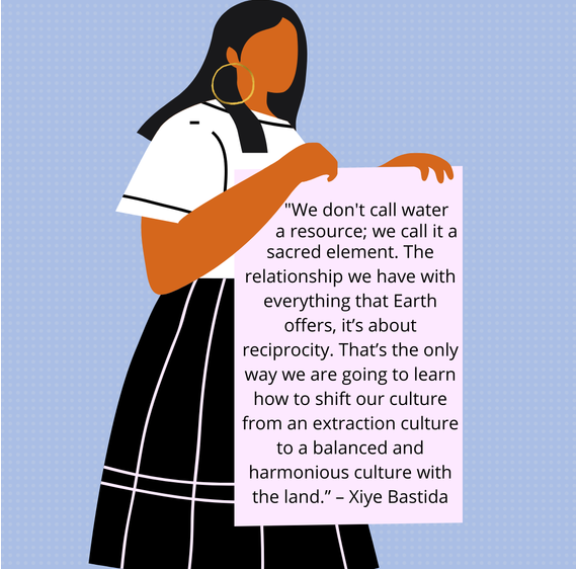
The heart of most environmental conflicts faced by governments usually involves what constitutes proper and sustainable levels of development. For many Indigenous peoples, sustainable development constitutes an integrated wholeness, where no single action is separate from others. From this view, sustainable development requires the maintenance and continuity of life, from generation to generation. Also, an understanding that humans are not isolated entities but are part of larger communities, which include the seas, rivers, mountains, trees, fish, animals and ancestral spirits. These, along with the sun, moon and cosmos, constitute a whole. From the point of view of indigenous people, sustainable development is a process that must integrate spiritual, cultural, economic, social, political, territorial and philosophical ideals (Dorsner, n.d.).
Take a look again at this representation of the social determinants of health from an Indigenous perspective that we discussed earlier in the course. Can you see these principles integrated or represented in this image?

Now watch the video clips below — what makes Indigenous environmental justice distinct or unique from environmental justice movements organized and led by colonizers and other non-Indigenous people?
Environmental activism for a just and equitable future: a sampling
It is true that the challenges facing minority, racialized and marginalized communities are great and the power that corporations, capitalism, governments and global institutions have can be crushing.
However, we also have many examples of grassroots fights against air, water and other pollution which are won by the people. If you did not watch this video on community organizing in the Chicago neighborhood of Pilsen, take a look now.
It is also important to reflect on how environmental justice intersects with other contemporary health challenges — such as systemic racism and the inequities we are observing during the COVID-19 pandemic.
Indigenous communities around the world have and continue to fight corporate degradation of their lands — and Indigenous communities’ knowledge have knowledge and skills which may help in the fight against and adaptation to climate change.
Choose one of the two following videos to explore Indigenous environmental justice activism.
The Standing Rock resistance movement has become a contemporary banner of Indigenous activism in the environmental justice movement. Indigenous youth were at the forefront of this movement to prevent further degradation of Indigenous lands in the United States.
Optional: If you would like to learn more about Standing Rock, a selection of informative video clips are below.
Summary
Environmental racism, or the disproportionate exposure that racialized, systematically marginalized and Indigenous people have around the world to dangerous toxins and pollution, is a structural determinant of health. This structural determinant of health is rooted in histories of inequity and injustice and has a negative impact on social determinants of health and, therefore, health outcomes for these populations. While environmentalism as a movement has made significant and important contributions to the preservation and protection of natural spaces and resources and has benefited humans around the world, the idea that nature must be ‘protected’ from humans at the foundation of many environmentalist movements has led to instances of discrimination and injustice against Indigenous people. In addition, environmental challenges have been blamed on populations in low- and middle-income countries who are not responsible for the bulk of environmental pollution and degradation globally.
The environmental justice movement in many ways goes against this notion of the separation between humans and nature. Rather, environmental justice seeks to integrate humans and nature while protecting all human populations and the environment from negative outcomes. Environmental justice recognizes that humans and nature are connected — and all people deserve equal protection from exposure to environmental hazards, including climate change, which can negatively affect their health.
While the entities that set economic agendas which can greatly harm the environment and the people living in and around it are powerful, there are many examples around the world of individuals and communities fighting to realize environmental justice for all.
NOTE: UIC students, you will continue this conversation on Environmental Racism from an Indigenous perspective by screening a film located in this week’s Learning Content on the course Blackboard site.
References
- CDC. (2021). Environmental Justice. CDC. https://www.cdc.gov/nceh/tracking/topics/EnvironmentalJustice.htm
- Chase B and Judge P. (2018). Interactive Map: Pollution Hits Chicago’s West, South Sides Hardest. Better Government Association. https://www.bettergov.org/news/interactive-map-pollution-hits-chicagos-west-south-sides-hardest/
- Chou V and Utter D. (2017). How Science and Genetics are Reshaping the Race Debate of the 21st Century. https://sitn.hms.harvard.edu/flash/2017/science-genetics-reshaping-race-debate-21st-century/
- Dorsner K. (n.d.) Environmental Justice and Indigenous Struggles in Environmental Biology. Modified from original by Matthew R. Fisher.
- Elliot, L. (n.d.). History of the environmental movement. Britannica. https://www.britannica.com/topic/environmentalism/History-of-the-environmental-movement
- Gupta, R. S., Zhang, X., Sharp, L. K., Shannon, J. J., & Weiss, K. B. (2008). Geographic variability in childhood asthma prevalence in Chicago. Journal of Allergy and Clinical Immunology, 121(3), 639-645.
- Misra, T. (2017). Why residents of ‘Black ZIP Codes’ Can’t Breathes. Bloomberg City Lab. https://www.bloomberg.com/news/articles/2017-07-28/risk-of-asthma-is-directly-related-to-your-neighborhood
- Open Stax CNX. (n.d.). Environmental Racism in Population, Urbanization and the Environment: Introduction to Sociology 2e. http://cnx.org/contents/02040312-72c8-441e-a685-20e9333f3e1d/Introduction_to_Sociology_2e.
- Schlangen, K. (2020). Environmentalism v Environmental Justice. Sustainability University of Minnesota Duluth. https://sustainability.d.umn.edu/environmentalism-vs-environmental-justice
- Schnecker, L. (2019 June 6). Chicago’s lifespan gap: Streeterville residents live to 90. Englewood residents die at 60. Study finds it’s the largest divide in the U.S. Chicago Tribune. https://www.chicagotribune.com/business/ct-biz-chicago-has-largest-life-expectancy-gap-between-neighborhoods-20190605-story.html
