Key Concepts
- Alcohol
- Alzheimer’s Disease
- Bipolar Disorder
- Depression
- Disabilities
- Drownings
- Emergency Medical Services & Transport
- Fire
- Falls
- Injury (intentional, Unintentional):Group III (3)
- Mental Disorders
- Mental Health
- mhGAP
- Opioids/Opiates
- Panic Disorder
- Poisoning
- Road Injury
- Schizophrenia
- Substance use
- Tobacco
- Vision & Hearing Loss
Prelim Engagement
- As a reminder, we are still focusing on the epidemiologic transition, as relates to Injuries (Group III). Please re-visit the Global Burden of Disease Visualized to see how mortality, DALY and diseases among the 3 Disease Groups changes over time - Keep your eye on Group 3, the green color block. https://vizhub.healthdata.org/gbd-compare/
- Check out this short video on: Mental Health as a Global Development goal: https://youtu.be/THT43iz9E8Y
- If you are interested in Mental Health, this is a great vide on one of the best programs on mental Health being coordinated by the World Health Organization known as Mental Health GAP or MhGAP video: https://youtu.be/TqlafjsOaoM
- Please watch this short Group III Injuries video: https://youtu.be/bCRE9lhF0iY
- Our final topic is Disabilities, take a quick look here: https://youtu.be/VjxFhEbCLmM
Introduction
Back in Sections 1.2 and 1.3 on Defining and Measuring the Global Burden of Disease, Parts 1 & 2 we were introduced to the three classifications or Groups of diseases utilized in global health studies. These are:
- Group I: Communicable Diseases
- Group II: Non-Communicable Diseases
- Group III: Injuries
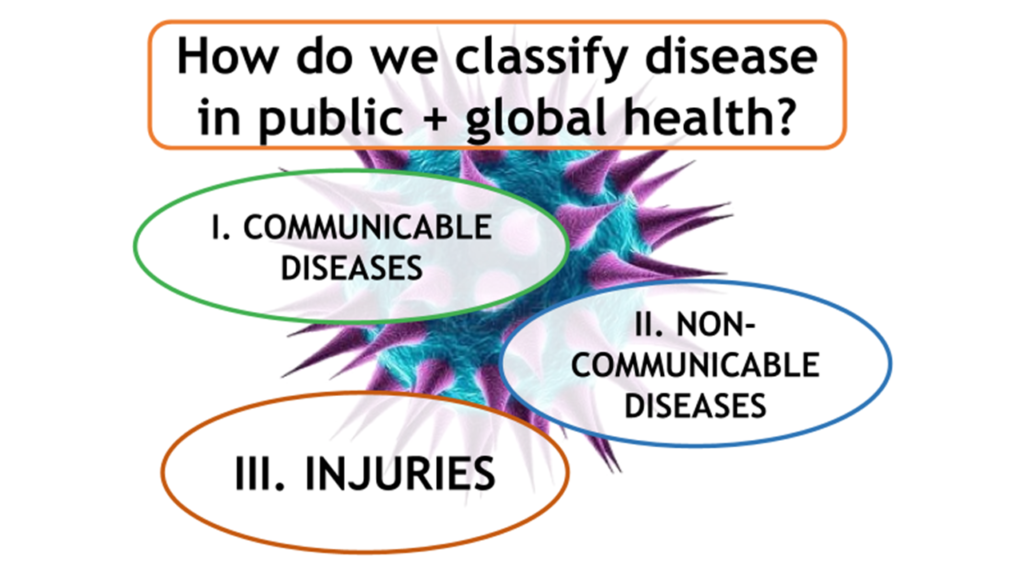
In Section 2.13 Mental Health, Injuries & Disabilities, we will take a deeper look into Group 3 – Injuries.
According to the World Health Organization, injuries” result from road traffic crashes, falls, drowning, burns, poisoning and acts of violence against oneself or others, among other causes .” (WHO, n.d.) Injuries and violence (who.int)
Injuries can be grouped in two types:
- Intentional Injuries: Suicide, Homicide
- Unintentional Injuries: Road Traffic Accidents, Drownings
Similar to both communicable and non communicable diseases, many of the key determinants of health and the causes of injuries lie outside the direct control of the health sector. Other sectors involved are those dealing with individual factors such as mental health status,disabilty status and occupational status. Risks for Injuries include mental disorders such as depression and anxiety, violence including exposure to interpersonal violence, war and terrorism and work related occupations such as mining, farming and chemical exposures.
Mental Health
| Context: This section is comprised of excerpts from many of the World Health Organizations Fact Sheet series which are available online from the WHO at: Fact sheets (who.int) |
Key facts
- Mental health is more than the absence of mental disorders.
- Mental health is an integral part of health; indeed, there is no health without mental health.
- Mental health is determined by a range of socioeconomic, biological and environmental factors.
- Cost-effective public health and intersectoral strategies and interventions exist to promote, protect and restore mental health.
Mental health is an integral and essential component of health. The WHO constitution states: “Health is a state of complete physical, mental and social well-being and not merely the absence of disease or infirmity.” An important implication of this definition is that mental health is more than just the absence of mental disorders or disabilities.
Mental health is a state of well-being in which an individual realizes his or her own abilities, can cope with the normal stresses of life, can work productively and is able to make a contribution to his or her community.
Mental health is fundamental to our collective and individual ability as humans to think, emote, interact with each other, earn a living and enjoy life. On this basis, the promotion, protection and restoration of mental health can be regarded as a vital concern of individuals, communities and societies throughout the world.
Determinants of mental health
Multiple social, psychological, and biological factors determine the level of mental health of a person at any point of time. For example, violence and persistent socio-economic pressures are recognized risks to mental health. The clearest evidence is associated with sexual violence.
Poor mental health is also associated with rapid social change, stressful work conditions, gender discrimination, social exclusion, unhealthy lifestyle, physical ill-health and human rights violations.
There are specific psychological and personality factors that make people vulnerable to mental health problems. Biological risks include genetic factors.
Mental health promotion and protection
Mental health promotion involves actions that improve psychological well-being. This may involve creating an environment that supports mental health.
An environment that respects and protects basic civil, political, socio-economic and cultural rights is fundamental to mental health. Without the security and freedom provided by these rights, it is difficult to maintain a high level of mental health.
National mental health policies should be concerned both with mental disorders and, with broader issues that promote mental health. Mental health promotion should be mainstreamed into governmental and nongovernmental policies and programmes. In addition to the health sector, it is essential to involve the education, labour, justice, transport, environment, housing, and welfare sectors.
Specific ways to promote mental health include:
- early childhood interventions (e.g. providing a stable environment that is sensitive to children’s health and nutritional needs, with protection from threats, opportunities for early learning, and interactions that are responsive, emotionally supportive and developmentally stimulating);
- support to children (e.g. life skills programmes, child and youth development programmes);
- socio-economic empowerment of women (e.g. improving access to education and microcredit schemes);
- social support for elderly populations (e.g. befriending initiatives, community and day centres for the aged);
- programmes targeted at vulnerable people, including minorities, indigenous people, migrants and people affected by conflicts and disasters (e.g. psycho-social interventions after disasters);
- mental health promotional activities in schools (e.g. programmes involving supportive ecological changes in schools);
- mental health interventions at work (e.g. stress prevention programmes);
- housing policies (e.g. housing improvement);
- ·violence prevention programmes (e.g. reducing availability of alcohol and access to arms);
- community development programmes (e.g. integrated rural development);
- poverty reduction and social protection for the poor;
- anti-discrimination laws and campaigns;
- promotion of the rights, opportunities and care of individuals with mental disorders.
Mental health care and treatment
In the context of national efforts to develop and implement mental health policy, it is vital to not only protect and promote the mental well-being of its citizens, but also address the needs of persons with defined mental disorders.
Knowledge of what to do about the escalating burden of mental disorders has improved substantially over the past decade. There is a growing body of evidence demonstrating both the efficacy and cost-effectiveness of key interventions for priority mental disorders in countries at different levels of economic development. Examples of interventions that are cost-effective, feasible, and affordable include:
- treatment of depression with psychological treatment and, for moderate to severe cases, antidepressant medicines;
- treatment of psychosis with antipsychotic medicines and psychosocial support;
- taxation of alcoholic beverages and restriction of their availability and marketing.
A range of effective measures also exists for the prevention of suicide, prevention and treatment of mental disorders in children, prevention and treatment of dementia, and treatment of substance-use disorders. The mental health Gap Action Programme (mhGAP) has produced evidence based guidance for non-specialists to enable them to better identify and manage a range of priority mental health conditions.
Mental Disorders
Key facts
- There are many different mental disorders, with different presentations. They are generally characterized by a combination of abnormal thoughts, perceptions, emotions, behaviour and relationships with others.
- Mental disorders include: depression, bipolar disorder, schizophrenia and other psychoses, dementia, and developmental disorders including autism.
- There are effective strategies for preventing mental disorders such as depression.
- There are effective treatments for mental disorders and ways to alleviate the suffering caused by them.
- Access to health care and social services capable of providing treatment and social support is key.
The burden of mental disorders continues to grow with significant impacts on health and major social, human rights and economic consequences in all countries of the world.
Depression
Depression is a common mental disorder and one of the main causes of disability worldwide. Globally, an estimated 264 million people are affected by depression.1 More women are affected than men.
Depression is characterized by sadness, loss of interest or pleasure, feelings of guilt or low self-worth, disturbed sleep or appetite, tiredness, and poor concentration. People with depression may also have multiple physical complaints with no apparent physical cause. Depression can be long-lasting or recurrent, substantially impairing people’s ability to function at work or school and to cope with daily life. At its most severe, depression can lead to suicide.
Prevention programmes have been shown to reduce depression, both for children (e.g. through protection and psychological support following physical and sexual abuse) and adults (e.g. through psychosocial assistance after disasters and conflicts).
There are also effective treatments. Mild to moderate depression can be effectively treated with talking therapies, such as cognitive behaviour therapy or psychotherapy. Antidepressants can be an effective form of treatment for moderate to severe depression but are not the first line of treatment for cases of mild depression. They should not be used for treating depression in children and are not the first line of treatment in adolescents, among whom they should be used with caution.
Management of depression should include psychosocial aspects, including identifying stress factors, such as financial problems, difficulties at work or physical or mental abuse, and sources of support, such as family members and friends. The maintenance or reactivation of social networks and social activities is important.
Bipolar disorder
This disorder affects about 45 million people worldwide1. It typically consists of both manic and depressive episodes separated by periods of normal mood. Manic episodes involve elevated or irritable mood, over-activity, rapid speech, inflated self-esteem and a decreased need for sleep. People who have manic attacks but do not experience depressive episodes are also classified as having bipolar disorder.
Effective treatments are available for the treatment of the acute phase of bipolar disorder and the prevention of relapse. These are medicines that stabilize mood. Psychosocial support is an important component of treatment.
Schizophrenia and other psychoses
Schizophrenia is a severe mental disorder, affecting 20 million people worldwide1. Psychoses, including schizophrenia, are characterized by distortions in thinking, perception, emotions, language, sense of self and behaviour. Common psychotic experiences include hallucinations (hearing, seeing or feeling things that are not there) and delusions (fixed false beliefs or suspicions that are firmly held even when there is evidence to the contrary). The disorder can make it difficult for people affected to work or study normally.
Stigma and discrimination can result in a lack of access to health and social services. Furthermore, people with psychosis are at high risk of exposure to human rights violations, such as long-term confinement in institutions.
Schizophrenia typically begins in late adolescence or early adulthood. Treatment with medicines and psychosocial support is effective. With appropriate treatment and social support, affected people can lead a productive life and be integrated in society. Facilitation of assisted living, supported housing and supported employment can act as a base from which people with severe mental disorders, including schizophrenia, can achieve numerous recovery goals as they often face difficulty in obtaining or retaining a place to live and normal employment.
Dementia
Worldwide, approximately 50 million people have dementia. Dementia is usually of a chronic or progressive nature in which there is deterioration in cognitive function (i.e. the ability to process thought) beyond what might be expected from normal ageing. It affects memory, thinking, orientation, comprehension, calculation, learning capacity, language, and judgement. The impairment in cognitive function is commonly accompanied, and occasionally preceded, by deterioration in emotional control, social behaviour, or motivation.
Dementia is caused by a variety of diseases and injuries that affect the brain, such as Alzheimer’s disease or stroke.
Though there is no treatment currently available to cure dementia or to alter its progressive course, many treatments are in various stages of clinical trials. Much can be done, however, to support and improve the lives of people with dementia and their carers and families.
Developmental disorders, including autism
Developmental disorder is an umbrella term covering intellectual disability and pervasive developmental disorders including autism. Developmental disorders usually have a childhood onset but tend to persist into adulthood, causing impairment or delay in functions related to the central nervous system maturation. They generally follow a steady course rather than the periods of remissions and relapses that characterize many mental disorders.
Intellectual disability is characterized by impairment of skills across multiple developmental areas such as cognitive functioning and adaptive behaviour. Lower intelligence diminishes the ability to adapt to the daily demands of life.
Symptoms of pervasive developmental disorders, such as autism, include impaired social behaviour, communication and language, and a narrow range of interests and activities that are both unique to the individual and are carried out repetitively. Developmental disorders often originate in infancy or early childhood. People with these disorders occasionally display some degree of intellectual disability.
Family involvement in care of people with developmental disorders is very important. Knowing what causes affected people both distress and well-being is an important element of care, as is finding out what environments are most conducive to better learning. Structure to daily routines helps prevent unnecessary stress, with regular times for eating, playing, learning, being with others, and sleeping. Regular follow up by health services of both children and adults with developmental disorders, and their careers, needs to be in place.
The community at large has a role to play in respecting the rights and needs of people with disabilities.
Who is at risk from mental disorders?
Determinants of mental health and mental disorders include not only individual attributes such as the ability to manage one’s thoughts, emotions, behaviours and interactions with others, but also social, cultural, economic, political and environmental factors such as national policies, social protection, standards of living, working conditions, and community support.
Stress, genetics, nutrition, perinatal infections and exposure to environmental hazards are also contributing factors to mental disorders.
Health and support
Health systems have not yet adequately responded to the burden of mental disorders. As a consequence, the gap between the need for treatment and its provision is wide all over the world. In low- and middle-income countries, between 76% and 85% of people with mental disorders receive no treatment for their disorder.2
A further compounding problem is the poor quality of care for many of those who do receive treatment.
In addition to support from health-care services, people with mental illness require social support and care. They often need help in accessing educational programmes which fit their needs, and in finding employment and housing which enable them to live and be active in their local communities.
Lets look at some of these mental health issues in more depth.
Depression
Key facts
- Depression is a common mental disorder. Globally, it is estimated that 5.0% of adults suffer from depression (1).
- Depression is a leading cause of disability worldwide and is a major contributor to the overall global burden of disease.
- More women are affected by depression than men.
- Depression can lead to suicide.
- There is effective treatment for mild, moderate, and severe depression.
Overview
Depression is a common illness worldwide, with an estimated 3.8% of the population affected, including 5.0% among adults and 5.7% among adults older than 60 years (1). Approximately 280 million people in the word have depression (1). Depression is different from usual mood fluctuations and short-lived emotional responses to challenges in everyday life. Especially when recurrent and with moderate or severe intensity, depression may become a serious health condition. It can cause the affected person to suffer greatly and function poorly at work, at school and in the family. At its worst, depression can lead to suicide. Over 700 000 people die due to suicide every year. Suicide is the fourth leading cause of death in 15-29-year-olds.
Although there are known, effective treatments for mental disorders, more than 75% of people in low- and middle-income countries receive no treatment (2). Barriers to effective care include a lack of resources, lack of trained health-care providers and social stigma associated with mental disorders. In countries of all income levels, people who experience depression are often not correctly diagnosed, and others who do not have the disorder are too often misdiagnosed and prescribed antidepressants.
Symptoms and patterns
During a depressive episode, the person experiences depressed mood (feeling sad, irritable, empty) or a loss of pleasure or interest in activities, for most of the day, nearly every day, for at least two weeks. Several other symptoms are also present, which may include poor concentration, feelings of excessive guilt or low self-worth, hopelessness about the future, thoughts about dying or suicide, disrupted sleep, changes in appetite or weight, and feeling especially tired or low in energy.
In some cultural contexts, some people may express their mood changes more readily in the form of bodily symptoms (e.g. pain, fatigue, weakness). Yet, these physical symptoms are not due to another medical condition.
During a depressive episode, the person experiences significant difficulty in personal, family, social, educational, occupational, and/or other important areas of functioning.
A depressive episode can be categorised as mild, moderate, or severe depending on the number and severity of symptoms, as well as the impact on the individual’s functioning.
There are different patterns of mood disorders including:
- single episode depressive disorder, meaning the person’s first and only episode);
- recurrent depressive disorder, meaning the person has a history of at least two depressive episodes; and
- bipolar disorder, meaning that depressive episodes alternate with periods of manic symptoms, which include euphoria or irritability, increased activity or energy, and other symptoms such as increased talkativeness, racing thoughts, increased self-esteem, decreased need for sleep, distractibility, and impulsive reckless behaviour.
Contributing factors and prevention
Depression results from a complex interaction of social, psychological, and biological factors. People who have gone through adverse life events (unemployment, bereavement, traumatic events) are more likely to develop depression. Depression can, in turn, lead to more stress and dysfunction and worsen the affected person’s life situation and the depression itself.
There are interrelationships between depression and physical health. For example, cardiovascular disease can lead to depression and vice versa.
Prevention programmes have been shown to reduce depression. Effective community approaches to prevent depression include school-based programmes to enhance a pattern of positive coping in children and adolescents. Interventions for parents of children with behavioural problems may reduce parental depressive symptoms and improve outcomes for their children. Exercise programmes for older persons can also be effective in depression prevention.
Diagnosis and treatment
There are effective treatments for depression.
Depending on the severity and pattern of depressive episodes over time, health-care providers may offer psychological treatments such as behavioural activation, cognitive behavioural therapy and interpersonal psychotherapy, and/or antidepressant medication such as selective serotonin reuptake inhibitors (SSRIs) and tricyclic antidepressants (TCAs). Different medications are used for bipolar disorder. Health-care providers should keep in mind the possible adverse effects associated with antidepressant medication, the ability to deliver either intervention (in terms of expertise, and/or treatment availability), and individual preferences. Different psychological treatment formats for consideration include individual and/or group face-to-face psychological treatments delivered by professionals and supervised lay therapists. Antidepressants are not the first line of treatment for mild depression. They should not be used for treating depression in children and are not the first line of treatment in adolescents, among whom they should be used with extra caution.
Schizophrenia
Key facts
- Schizophrenia is a chronic and severe mental disorder affecting 20 million people worldwide (1).
- Schizophrenia is characterized by distortions in thinking, perception, emotions, language, sense of self and behavior. Common experiences include hallucinations (hearing voices or seeing things that are not there) and delusions (fixed, false beliefs).
- Worldwide, schizophrenia is associated with considerable disability and may affect educational and occupational performance.
- People with schizophrenia are 2-3 times more likely to die early than the general population (2). This is often due to preventable physical diseases, such as cardiovascular disease, metabolic disease and infections.
- Stigma, discrimination and violation of human rights of people with schizophrenia is common.
- Schizophrenia is treatable. Treatment with medicines and psychosocial support is effective.
- Facilitation of assisted living, supported housing and supported employment are effective management strategies for people with schizophrenia.
Symptoms
Schizophrenia is a psychosis, a type of mental illness characterized by distortions in thinking, perception, emotions, language, sense of self and behaviour. Common experiences include:
- hallucination: hearing, seeing or feeling things that are not there;
- delusion: fixed false beliefs or suspicions not shared by others in the person’s culture and that are firmly held even when there is evidence to the contrary;
- abnormal behaviour: disorganised behaviour such as wandering aimlessly, mumbling or laughing to self, strange appearance, self-neglect or appearing unkempt;
- disorganised speech: incoherent or irrelevant speech; and/or
- disturbances of emotions: marked apathy or disconnect between reported emotion and what is observed such as facial expression or body language.
Magnitude and impact
Schizophrenia affects 20 million people worldwide but is not as common as many other mental disorders. Schizophrenia also commonly starts earlier among men.
Schizophrenia is associated with considerable disability and may affect educational and occupational performance.
People with schizophrenia are 2 – 3 times more likely to die early than the general population (2). This is often due to physical illnesses, such as cardiovascular, metabolic and infectious diseases.
Stigma, discrimination and violation of human rights of people with schizophrenia is common.
Causes of schizophrenia
Research has not identified one single factor. It is thought that an interaction between genes and a range of environmental factors may cause schizophrenia.
Psychosocial factors may also contribute to schizophrenia.
Services
More than 69% of people with schizophrenia are not receiving appropriate care (3). Ninety per cent of people with untreated schizophrenia live in low- and middle- income countries. Lack of access to mental health services is an important issue. Furthermore, people with schizophrenia are less likely to seek care than the general population.
Management
Schizophrenia is treatable. Treatment with medicines and psychosocial support is effective. However, most people with chronic schizophrenia lack access to treatment.
There is clear evidence that old-style mental hospitals are not effective in providing the treatment that people with mental disorders need and violate basic human rights of persons with mental disorders. Efforts to transfer care from mental health institutions to the community need to be expanded and accelerated. The engagement of family members and the wider community in providing support is very important.
Programmes in several low- and middle- income countries (e.g. Ethiopia, Guinea-Bissau, India, Iran, Pakistan and United Republic of Tanzania) have demonstrated the feasibility of providing care to people with severe mental illness through the primary health-care system by:
- training primary health-care personnel;
- providing access to essential drugs;
- supporting families in providing home care;
- educating the public to decrease stigma and discrimination;
- enhancing independent living skills through recovery-oriented psychosocial interventions (e.g. life skills training, social skills training) for people with schizophrenia and for their families and/or caregivers; and
- facilitating independent living, if possible, or assisted living, supported housing and supported employment for people with schizophrenia. This can act as a base for people with schizophrenia to achieve recovery goals. People affected by schizophrenia often face difficulty in obtaining or retaining normal employment or housing opportunities.
Human rights violations
People with schizophrenia are prone to human rights violations both inside mental health institutions and in communities. Stigma of the disorder is high. This contributes to discrimination, which can in turn limit access to general health care, education, housing and employment.
Suicide
Key facts
- More than 700 000 people die due to suicide every year.
- For every suicide there are many more people who attempt suicide. A prior suicide attempt is the single most important risk factor for suicide in the general population.
- Suicide is the fourth leading cause of death in 15-19-year-olds.
- 77% of global suicides occur in low- and middle-income countries.
- Ingestion of pesticide, hanging and firearms are among the most common methods of suicide globally.
Every year 703 000 people take their own life and there are many more people who attempt suicide. Every suicide is a tragedy that affects families, communities and entire countries and has long-lasting effects on the people left behind. Suicide occurs throughout the lifespan and was the fourth leading cause of death among 15-29 year-olds globally in 2019.
Suicide does not just occur in high-income countries, but is a global phenomenon in all regions of the world. In fact, over 77% of global suicides occurred in low- and middle-income countries in 2019.
Suicide is a serious public health problem; however, suicides are preventable with timely, evidence-based and often low-cost interventions. For national responses to be effective, a comprehensive multisectoral suicide prevention strategy is needed.
Who is at risk?
While the link between suicide and mental disorders (in particular, depression and alcohol use disorders) is well established in high-income countries, many suicides happen impulsively in moments of crisis with a breakdown in the ability to deal with life stresses, such as financial problems, relationship break-up or chronic pain and illness.
In addition, experiencing conflict, disaster, violence, abuse, or loss and a sense of isolation are strongly associated with suicidal behaviour. Suicide rates are also high amongst vulnerable groups who experience discrimination, such as refugees and migrants; indigenous peoples; lesbian, gay, bisexual, transgender, intersex (LGBTI) persons; and prisoners. By far the strongest risk factor for suicide is a previous suicide attempt.
Methods of suicide
It is estimated that around 20% of global suicides are due to pesticide self-poisoning, most of which occur in rural agricultural areas in low- and middle-income countries. Other common methods of suicide are hanging and firearms.
Knowledge of the most commonly used suicide methods is important to devise prevention strategies which have shown to be effective, such as restriction of access to means of suicide.
Prevention and control
Suicides are preventable. There are a number of measures that can be taken at population, sub-population and individual levels to prevent suicide and suicide attempts. LIVE LIFE, WHO’s approach to suicide prevention, recommends the following key effective evidence-based interventions:
- limit access to the means of suicide (e.g. pesticides, firearms, certain medications);
- interact with the media for responsible reporting of suicide;
- foster socio-emotional life skills in adolescents;
- early identify, assess, manage and follow up anyone who is affected by suicidal behaviours.,
These need to go hand-in-hand with the following foundational pillars: situation analysis, multisectoral collaboration, awareness raising, capacity building, financing, surveillance and monitoring and evaluation.
Suicide prevention efforts require coordination and collaboration among multiple sectors of society, including the health sector and other sectors such as education, labour, agriculture, business, justice, law, defence, politics, and the media. These efforts must be comprehensive and integrated as no single approach alone can make an impact on an issue as complex as suicide.
Challenges and obstacles
Stigma and taboo
Stigma, particularly surrounding mental disorders and suicide, means many people thinking of taking their own life or who have attempted suicide are not seeking help and are therefore not getting the help they need. The prevention of suicide has not been adequately addressed due to a lack of awareness of suicide as a major public health problem and the taboo in many societies to openly discuss it. To date, only a few countries have included suicide prevention among their health priorities and only 38 countries report having a national suicide prevention strategy.
Raising community awareness and breaking down the taboo is important for countries to make progress in preventing suicide.
Data quality
Globally, the availability and quality of data on suicide and suicide attempts is poor. Only some 80 Member States have good-quality vital registration data that can be used directly to estimate suicide rates. This problem of poor-quality mortality data is not unique to suicide, but given the sensitivity of suicide – and the illegality of suicidal behaviour in some countries – it is likely that under-reporting and misclassification are greater problems for suicide than for most other causes of death.
Improved surveillance and monitoring of suicide and suicide attempts is required for effective suicide prevention strategies. Cross-national differences in the patterns of suicide, and changes in the rates, characteristics and methods of suicide, highlight the need for each country to improve the comprehensiveness, quality and timeliness of their suicide-related data. This includes vital registration of suicide, hospital-based registries of suicide attempts and nationally-representative surveys collecting information about self-reported suicide attempts.
Mental Health of Older Adults
Key facts
- Globally, the population is ageing rapidly. Between 2015 and 2050, the proportion of the world’s population over 60 years will nearly double, from 12% to 22%.
- Mental health and well-being are as important in older age as at any other time of life.
- Mental and neurological disorders among older adults account for 6.6% of the total disability (DALYs) for this age group.
- Approximately 15% of adults aged 60 and over suffer from a mental disorder.
Older adults, those aged 60 or above, make important contributions to society as family members, volunteers and as active participants in the workforce. While most have good mental health, many older adults are at risk of developing mental disorders, neurological disorders or substance use problems as well as other health conditions such as diabetes, hearing loss, and osteoarthritis. Furthermore, as people age, they are more likely to experience several conditions at the same time.
The problem
The world’s population is ageing rapidly. Between 2015 and 2050, the proportion of the world’s older adults is estimated to almost double from about 12% to 22%. In absolute terms, this is an expected increase from 900 million to 2 billion people over the age of 60. Older people face special physical and mental health challenges which need to be recognized.
Over 20% of adults aged 60 and over suffer from a mental or neurological disorder (excluding headache disorders) and 6.6% of all disability (disability adjusted life years-DALYs) among people over 60 years is attributed to mental and neurological disorders. These disorders in older people account for 17.4% of Years Lived with Disability (YLDs). The most common mental and neurological disorders in this age group are dementia and depression, which affect approximately 5% and 7% of the world’s older population, respectively. Anxiety disorders affect 3.8% of the older population, substance use problems affect almost 1% and around a quarter of deaths from self-harm are among people aged 60 or above. Substance abuse problems among older people are often overlooked or misdiagnosed.
Mental health problems are under-identified by health-care professionals and older people themselves, and the stigma surrounding these conditions makes people reluctant to seek help.
Risk factors for mental health problems among older adults
There may be multiple risk factors for mental health problems at any point in life. Older people may experience life stressors common to all people, but also stressors that are more common in later life, like a significant ongoing loss in capacities and a decline in functional ability. For example, older adults may experience reduced mobility, chronic pain, frailty or other health problems, for which they require some form of long-term care. In addition, older people are more likely to experience events such as bereavement, or a drop in socioeconomic status with retirement. All of these stressors can result in isolation, loneliness or psychological distress in older people, for which they may require long-term care.
Mental health has an impact on physical health and vice versa. For example, older adults with physical health conditions such as heart disease have higher rates of depression than those who are healthy. Additionally, untreated depression in an older person with heart disease can negatively affect its outcome.
Older adults are also vulnerable to elder abuse – including physical, verbal, psychological, financial and sexual abuse; abandonment; neglect; and serious losses of dignity and respect. Current evidence suggests that 1 in 6 older people experience elder abuse. Elder abuse can lead not only to physical injuries, but also to serious, sometimes long-lasting psychological consequences, including depression and anxiety.
Dementia and depression among older people as public health issues
Dementia
Dementia is a syndrome, usually of a chronic or progressive nature, in which there is deterioration in memory, thinking, behaviour and the ability to perform everyday activities. It mainly affects older people, although it is not a normal part of ageing.
It is estimated that 50 million people worldwide are living with dementia with nearly 60% living in low- and middle-income countries. The total number of people with dementia is projected to increase to 82 million in 2030 and 152 million in 2050.
There are significant social and economic issues in terms of the direct costs of medical, social and informal care associated with dementia. Moreover, physical, emotional and economic pressures can cause great stress to families and carers. Support is needed from the health, social, financial and legal systems for both people with dementia and their carers.
Depression
Depression can cause great suffering and leads to impaired functioning in daily life. Unipolar depression occurs in 7% of the general older population and it accounts for 5.7% of YLDs among those over 60 years old. Depression is both underdiagnosed and undertreated in primary care settings. Symptoms are often overlooked and untreated because they co-occur with other problems encountered by older adults.
Older people with depressive symptoms have poorer functioning compared to those with chronic medical conditions such as lung disease, hypertension or diabetes. Depression also increases the perception of poor health, the utilization of health care services and costs.
Treatment and care strategies to address mental health needs of older people
It is important to prepare health providers and societies to meet the specific needs of older populations, including:
- training for health professionals in providing care for older people;
- preventing and managing age-associated chronic diseases including mental, neurological and substance use disorders;
- designing sustainable policies on long-term and palliative care; and
- developing age-friendly services and settings.
Health promotion
The mental health of older adults can be improved through promoting Active and Healthy Ageing. Mental health-specific health promotion for older adults involves creating living conditions and environments that support wellbeing and allow people to lead a healthy life. Promoting mental health depends largely on strategies to ensure that older people have the necessary resources to meet their needs, such as:
- providing security and freedom;
- adequate housing through supportive housing policy;
- social support for older people and their caregivers;
- health and social programs targeted at vulnerable groups such as those who live alone and rural populations or who suffer from a chronic or relapsing mental or physical illness;
- programs to prevent and deal with elder abuse; and
- community development programs.
Interventions
Prompt recognition and treatment of mental, neurological and substance use disorders in older adults is essential. Both psychosocial interventions and medicines are recommended.
There is no medication currently available to cure dementia but much can be done to support and improve the lives of people with dementia and their caregivers and families, such as:
- early diagnosis, in order to promote early and optimal management;
- optimizing physical and mental health, functional ability and well-being;
- identifying and treating accompanying physical illness;
- detecting and managing challenging behavior; and
- providing information and long-term support to caregivers.
Mental health care in the community
Good general health and social care is important for promoting older people’s health, preventing disease and managing chronic illnesses. Training all health providers in working with issues and disorders related to ageing is therefore important. Effective, community-level primary mental health care for older people is crucial. It is equally important to focus on the long-term care of older adults suffering from mental disorders, as well as to provide caregivers with education, training and support.
An appropriate and supportive legislative environment based on internationally accepted human rights standards is required to ensure the highest quality of services to people with mental illness and their caregivers.
Dementia
Key facts
- Dementia is a syndrome in which there is deterioration in cognitive function beyond what might be expected from the usual consequences of biological ageing.
- Although dementia mainly affects older people, it is not an inevitable consequence of ageing.
- Currently more than 55 million people live with dementia worldwide, and there are nearly 10 million new cases every year.
- Dementia results from a variety of diseases and injuries that primarily or secondarily affect the brain. Alzheimer’s disease is the most common form of dementia and may contribute to 60-70% of cases.
- Dementia is currently the seventh leading cause of death among all diseases and one of the major causes of disability and dependency among older people globally.
- Dementia has physical, psychological, social and economic impacts, not only for people living with dementia, but also for their carers, families and society at large.
Dementia is a syndrome – usually of a chronic or progressive nature – that leads to deterioration in cognitive function (i.e. the ability to process thought) beyond what might be expected from the usual consequences of biological ageing. It affects memory, thinking, orientation, comprehension, calculation, learning capacity, language, and judgement. Consciousness is not affected. The impairment in cognitive function is commonly accompanied, and occasionally preceded, by changes in mood, emotional control, behaviour, or motivation.
Dementia results from a variety of diseases and injuries that primarily or secondarily affect the brain, such as Alzheimer’s disease or stroke.
Dementia is currently the seventh leading cause of death among all diseases and one of the major causes of disability and dependency among older people worldwide. Dementia has physical, psychological, social and economic impacts, not only for people living with dementia, but also for their carers, families and society at large. There is often a lack of awareness and understanding of dementia, resulting in stigmatization and barriers to diagnosis and care.
Signs and symptoms
Dementia affects each person in a different way, depending upon the underlying causes, other health conditions and the person’s cognitive functioning before becoming ill. The signs and symptoms linked to dementia can be understood in three stages.
Early stage: the early stage of dementia is often overlooked because the onset is gradual. Common symptoms may include:
- forgetfulness
- losing track of the time
- becoming lost in familiar places.
Middle stage: as dementia progresses to the middle stage, the signs and symptoms become clearer and may include:
- becoming forgetful of recent events and people’s names
- becoming confused while at home
- having increasing difficulty with communication
- needing help with personal care
- experiencing behavior changes, including wandering and repeated questioning
Late stage: the late stage of dementia is one of near total dependence and inactivity. Memory disturbances are serious and the physical signs and symptoms become more obvious and may include:
- becoming unaware of the time and place
- having difficulty recognizing relatives and friends
- having an increasing need for assisted self-care
- having difficulty walking
- experiencing behavior changes that may escalate and include aggression.
Common forms of dementia
There are many different forms of dementia. Alzheimer’s disease is the most common form and may contribute to 60-70% of cases. Other major forms include vascular dementia, dementia with Lewy bodies (abnormal aggregates of protein that develop inside nerve cells), and a group of diseases that contribute to frontotemporal dementia (degeneration of the frontal lobe of the brain). Dementia may also develop after a stroke or in the context of certain infections such as HIV, harmful use of alcohol, repetitive physical injuries to the brain (known as chronic traumatic encephalopathy) or nutritional deficiencies. The boundaries between different forms of dementia are indistinct and mixed forms often co-exist.
Rates of dementia
Worldwide, around 55 million people have dementia, with over 60% living in low- and middle-income countries. As the proportion of older people in the population is increasing in nearly every country, this number is expected to rise to 78 million in 2030 and 139 million in 2050.
Treatment and care
There is currently no treatment available to cure dementia. Anti-dementia medicines and disease-modifying therapies developed to date have limited efficacy and are primarily labeled for Alzheimer’s disease, though numerous new treatments are being investigated in various stages of clinical trials.
Additionally, much can be offered to support and improve the lives of people with dementia and their carers and families. The principal goals for dementia care are:
- early diagnosis in order to promote early and optimal management
- optimizing physical health, cognition, activity and well-being
- identifying and treating accompanying physical illness
- understanding and managing behaviour changes
- providing information and long-term support to carers.
Risk factors and prevention
Although age is the strongest known risk factor for dementia, it is not an inevitable consequence of biological ageing. Further, dementia does not exclusively affect older people – young onset dementia (defined as the onset of symptoms before the age of 65 years) accounts for up to 9% of cases. Studies show that people can reduce their risk of cognitive decline and dementia by being physically active, not smoking, avoiding harmful use of alcohol, controlling their weight, eating a healthy diet, and maintaining healthy blood pressure, cholesterol and blood sugar levels. Additional risk factors include depression, social isolation, low educational attainment, cognitive inactivity and air pollution.
Social and economic impact
Dementia has significant social and economic implications in terms of direct medical and social care costs, and the costs of informal care. In 2019, the estimated total global societal cost of dementia was US$ 1.3 trillion, and these costs are expected to surpass US$ 2.8 trillion by 2030 as both the number of people living with dementia and care costs increase.
Impact on families and carers
In 2019, informal carers (i.e. most commonly family members and friends) spent on average 5 hours per day providing care for people living with dementia. This can be overwhelming . Physical, emotional and financial pressures can cause great stress to families and carers, and support is required from the health, social, financial and legal systems. Fifty percent of the global cost of dementia is attributed to informal care.
Disproportionate impact on women
Globally, dementia has a disproportionate impact on women. Sixty-five percent of total deaths due to dementia are women, and disability-adjusted life years (DALYs) due to dementia are roughly 60% higher in women than in men. Additionally, women provide the majority of informal care for people living with dementia, accounting for 70% of carer hours.
Human rights
Unfortunately, people with dementia are frequently denied the basic rights and freedoms available to others. In many countries, physical and chemical restraints are used extensively in care homes for older people and in acute-care settings, even when regulations are in place to uphold the rights of people to freedom and choice.
An appropriate and supportive legislative environment based on internationally-accepted human rights standards is required to ensure the highest quality of care for people with dementia and their caregivers.
Next we will transition to substance use which are often associated as being risk factors for mental health and physical health status. Specifically we will take a look at tobacco, alcohol and opioids.
Tobacco
Key facts
- Tobacco kills up to half of its users.
- Tobacco kills more than 8 million people each year. More than 7 million of those deaths are the result of direct tobacco use while around 1.2 million are the result of non-smokers being exposed to second-hand smoke.
- Over 80% of the world’s 1.3 billion tobacco users live in low- and middle-income countries.
Leading cause of death, illness and impoverishment
The tobacco epidemic is one of the biggest public health threats the world has ever faced, killing more than 8 million people a year around the world. More than 7 million of those deaths are the result of direct tobacco use while around 1.2 million are the result of non-smokers being exposed to second-hand smoke.(1)
All forms of tobacco are harmful, and there is no safe level of exposure to tobacco. Cigarette smoking is the most common form of tobacco use worldwide. Other tobacco products include waterpipe tobacco, various smokeless tobacco products, cigars, cigarillos, roll-your-own tobacco, pipe tobacco, bidis and kreteks.
Waterpipe tobacco use is damaging to health in similar ways to cigarette tobacco use. However, the health dangers of waterpipe tobacco use are often little understood by users.
Smokeless tobacco use is highly addictive and damaging to health. Smokeless tobacco contains many cancer-causing toxins and its use increases the risk of cancers of the head, neck, throat, oesophagus and oral cavity (including cancer of the mouth, tongue, lip and gums) as well as various dental diseases.
Over 80% of the 1.3 billion tobacco users worldwide live in low- and middle-income countries, where the burden of tobacco-related illness and death is heaviest. Tobacco use contributes to poverty by diverting household spending from basic needs such as food and shelter to tobacco.
The economic costs of tobacco use are substantial and include significant health care costs for treating the diseases caused by tobacco use as well as the lost human capital that results from tobacco-attributable morbidity and mortality.
In some countries children from poor households are employed in tobacco farming to boost family income. Tobacco growing farmers are also exposed to a number of health risks, including the “green tobacco sickness”.
Surveillance is key
Effective monitoring tracks the extent and character of the tobacco epidemic and indicates how best to implement policies.
Key measures to reduce the demand for tobacco
Second-hand smoke kills
- Second-hand smoke is the smoke that fills enclosed spaces when people burn tobacco products such as cigarettes, bidis and water-pipes.
- There is no safe level of exposure to second-hand tobacco smoke, which causes more than 1.2 million premature deaths per year and serious cardiovascular and respiratory diseases.
- Almost half of children regularly breathe air polluted by tobacco smoke in public places, and 65 000 die each year from illnesses attributable to second-hand smoke.
- In infants, it raises the risk of sudden infant death syndrome. In pregnant women, it causes pregnancy complications and low birth weight.
- Smoke-free laws protect the health of non-smokers and are popular, as they do not harm business and they encourage smokers to quit.
Pictorial health warnings work
- Large pictorial or graphic health warnings, including plain packaging, with hard hitting messages can persuade smokers to protect the health of non-smokers by not smoking inside the home, increase compliance with smoke-free laws and encourage more people to quit tobacco use.
- Studies show that pictorial warnings significantly increase people’s awareness of the harms from tobacco use.
- Mass media campaigns can also reduce demand for tobacco by promoting the protection of non-smokers and by convincing people to stop using tobacco.
Bans on tobacco advertising lower consumption
- Comprehensive bans on tobacco advertising, promotion and sponsorship can reduce tobacco consumption.
- A comprehensive ban covers both direct and indirect varieties of promotion.
- Direct forms include, among others, advertising on television, radio, print publications, billboards and more recently in various social media platforms.
- Indirect forms include, among others, brand sharing, brand stretching, free distribution, price discounts, point of sale product displays, sponsorships and promotional activities masquerading as corporate social responsibility programmes.
Taxes are effective in reducing tobacco use
- Tobacco taxes are the most cost-effective way to reduce tobacco use and health care costs, especially among youth and low-income people, while increasing revenue in many countries.
- The tax increases need to be high enough to push prices up above income growth. An increase of tobacco prices by 10% decreases tobacco consumption by about 4% in high-income countries and about 5% in low- and middle-income countries.
- Despite this, introducing high tobacco taxes is a measure that is least implemented among the set of available tobacco control measures.
Tobacco users need help to quit
- Studies show that few people understand the specific health risks of tobacco use. However, when smokers become aware of the dangers of tobacco, most want to quit.
- Without cessation support only 4% of attempts to quit tobacco will succeed.
- Professional support and proven cessation medications can more than double a tobacco user’s chance of successful quitting.
Illicit trade of tobacco products must be stopped
The illicit trade in tobacco products poses major health, economic and security concerns around the world. It is estimated that 1 in every 10 cigarettes and tobacco products consumed globally is illicit. The illicit market is supported by various players, ranging from petty traders to big tobacco companies, and in some instances even organized criminal networks involved in arms and human trafficking.
Tax avoidance (licit) and tax evasion (illicit) undermine the effectiveness of tobacco control policies, particularly higher tobacco taxes.
The tobacco industry and others often argue that high tobacco product taxes lead to tax evasion. However, experience from many countries demonstrate that illicit trade can be successfully addressed even when tobacco taxes and prices are raised.
Stopping illicit trade in tobacco products is a health priority and is achievable. But to do so requires improvement of national and sub-national tax administration systems and international collaboration. The WHO FCTC Protocol to Eliminate the Illicit Trade of Tobacco Products (ITP) sets out a range of important measures and interventions to reduce tobacco use and its health and economic consequences.
Novel and emerging nicotine and tobacco products
Heated tobacco products (HTPs)
HTPs are like all other tobacco products, inherently toxic and contain carcinogens. They should be treated like any other tobacco product when it comes to setting policies on HTPs. HTPs produce aerosols containing nicotine and toxic chemicals upon heating of the tobacco, or activation of a device containing the tobacco. Examples include iQOS, Ploom, glo and PAX vaporizers. The aerosols are inhaled by users during a process of sucking or smoking involving a device. They contain the highly addictive substance nicotine, non-tobacco additives and are often flavoured.
In recent years, HTPs have been promoted as ‘reduced harm’ products and/or products that can help people quit conventional tobacco smoking. HTPs expose users to toxic emissions, many of which cause cancer and currently there is not enough evidence to suggest that they are less harmful than conventional cigarettes. There is also insufficient evidence at present on the effects of second-hand emissions produced by HTPs, though the emissions from these products contain harmful and potentially harmful chemicals (2).
E-cigarettes
Electronic nicotine delivery systems (ENDS) and electronic non-nicotine delivery systems (ENNDS), commonly referred to as e-cigarettes, are devices which heat a liquid to create an aerosol which is then inhaled by the user, these may or may not contain nicotine. The main constituents of the solution by volume are propylene glycol, with or without glycerol, and flavouring agents. E-cigarettes do not contain tobacco but are harmful to health and are not safe. However, it is too early to provide a clear answer on the long-term impacts of using them or being exposed to them.
E-cigarettes are particularly risky when used by children and adolescents. Nicotine is highly addictive and young people’s brains develop up to their mid-twenties.
ENDS use increases the risk of heart disease and lung disorders. They also pose significant risks to pregnant women who use them, as they can damage the growing fetus.
Advertising, marketing and promotion of ENDS has grown rapidly, through channels which rely heavily on internet and social media (3). Much of the marketing around these products gives rise to concern about deceptive health claims, deceptive claims on cessation efficacy, and targeting towards youth (especially with the use of flavours).
ENDS/ENNDS should not be promoted as a cessation aid until adequate evidence is available and the public health community can agree upon the effectiveness of those specific products. Where ENDS and ENNDS are not banned, WHO recommends that the products be regulated in accordance with four key objectives:
- Prevent initiation of ENDS/ENNDS by non-smokers, minors and vulnerable groups;
- Minimize health risks for ENDS/ENNDS users and protect non-users from exposure to their emissions;
- Prevent unproven health claims being made about ENDS/ENNDS; and
- Protect tobacco control from all commercial and other vested interests related to ENDS/ENNDS, including interests of the tobacco industry (4, 5).
Alcohol
Key facts
- Worldwide, 3 million deaths every year result from harmful use of alcohol, this represent 5.3 % of all deaths.
- The harmful use of alcohol is a causal factor in more than 200 disease and injury conditions.
- Overall 5.1 % of the global burden of disease and injury is attributable to alcohol, as measured in disability-adjusted life years (DALYs).
- Alcohol consumption causes death and disability relatively early in life. In the age group 20–39 years approximately 13.5 % of the total deaths are alcohol-attributable.
- There is a causal relationship between harmful use of alcohol and a range of mental and behavioural disorders, other noncommunicable conditions as well as injuries.
- The latest causal relationships have been established between harmful drinking and incidence of infectious diseases such as tuberculosis as well as the course of HIV/AIDS.
- Beyond health consequences, the harmful use of alcohol brings significant social and economic losses to individuals and society at large.
Alcohol is a psychoactive substance with dependence-producing properties that has been widely used in many cultures for centuries. The harmful use of alcohol causes a large disease, social and economic burden in societies.
The harmful use of alcohol can also result in harm to other people, such as family members, friends, co-workers and strangers. Moreover, the harmful use of alcohol results in a significant health, social and economic burden on society at large.
Alcohol consumption is a causal factor in more than 200 disease and injury conditions. Drinking alcohol is associated with a risk of developing health problems such as mental and behavioural disorders, including alcohol dependence, major noncommunicable diseases such as liver cirrhosis, some cancers and cardiovascular diseases, as well as injuries resulting from violence and road clashes and collisions.
A significant proportion of the disease burden attributable to alcohol consumption arises from unintentional and intentional injuries, including those due to road traffic crashes, violence, and suicides, and fatal alcohol-related injuries tend to occur in relatively younger age groups.
The latest causal relationships are those between harmful drinking and incidence of infectious diseases such as tuberculosis as well as the incidence and course of HIV/AIDS. Alcohol consumption by an expectant mother may cause fetal alcohol syndrome and pre-term birth complications.
Factors affecting alcohol consumption and alcohol-related harm
A variety of factors have been identified at the individual and the societal level, which affect the levels and patterns of alcohol consumption and the magnitude of alcohol-related problems in populations.
Environmental factors include economic development, culture, availability of alcohol, and the comprehensiveness and levels of implementation and enforcement of alcohol policies. For a given level or pattern of drinking, vulnerabilities within a society are likely to have similar differential effects as those between societies. Although there is no single risk factor that is dominant, the more vulnerabilities a person has, the more likely the person is to develop alcohol-related problems as a result of alcohol consumption.
Conceptual causal model of alcohol consumption and health outcomes
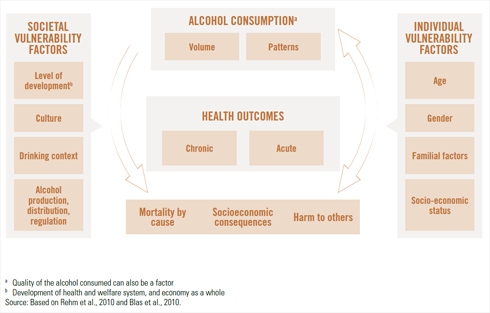
The impact of alcohol consumption on chronic and acute health outcomes in populations is largely determined by 2 separate but related dimensions of drinking:
- the total volume of alcohol consumed, and
- the pattern of drinking.
The context of drinking plays an important role in occurrence of alcohol-related harm, particularly associated with health effects of alcohol intoxication, and, on rare occasions, also the quality of alcohol consumed. Alcohol consumption can have an impact not only on the incidence of diseases, injuries and other health conditions, but also on the course of disorders and their outcomes in individuals.
There are gender differences in alcohol-related mortality and morbidity, as well as levels and patterns of alcohol consumption. The percentage of alcohol-attributable deaths among men amount to 7.7 % of all global deaths compared to 2.6 % of all deaths among women. Total alcohol per capita consumption in 2010 among male and female drinkers worldwide was on average 19.4 litres for males and 7.0 litres of pure alcohol for females.
Ways to reduce the burden from harmful use of alcohol
The health, safety and socioeconomic problems attributable to alcohol can be effectively reduced and requires actions on the levels, patterns and contexts of alcohol consumption and the wider social determinants of health.
Countries have a responsibility for formulating, implementing, monitoring and evaluating public policies to reduce the harmful use of alcohol. Substantial scientific knowledge exists for policy-makers on the effectiveness and cost-effectiveness of the following strategies:
- regulating the marketing of alcoholic beverages (in particular to younger people);
- regulating and restricting the availability of alcohol;
- enacting appropriate drink-driving policies;
- reducing demand through taxation and pricing mechanisms;
- raising awareness of public health problems caused by harmful use of alcohol and ensuring support for effective alcohol policies;
- providing accessible and affordable treatment for people with alcohol-use disorders; and
- implementing screening and brief interventions programs for hazardous and harmful drinking in health services.
Opioids
Key facts
- The term “opioids” includes compounds that are extracted from the poppy seed as well as semisynthetic and synthetic compounds with similar properties that can interact with opioid receptors in the brain.
- Opioids are commonly used for the treatment of pain, and include medicines such as morphine, fentanyl and tramadol.
- Their non-medical use, prolonged use, misuse and use without medical supervision can lead to opioid dependence and other health problems.
- Due to their pharmacological effects, opioids can cause breathing difficulties, and opioid overdose can lead to death.
- Worldwide, about 0.5 million deaths are attributable to drug use. More than 70% of these deaths are related to opioids, with more than 30% of those deaths caused by overdose.
- There are effective treatment interventions for opioid dependence that can decrease the risk of overdose, yet less than 10% of people who need such treatment are receiving it.
- The medication naloxone can prevent death from an opioid overdose if administered in time.
Overview
The term “opioids” includes compounds that are extracted from the poppy seed as well as semisynthetic and synthetic compounds with similar properties that can interact with opioid receptors in the brain. Opioids have analgesic and sedative effects, and are commonly used for the management of pain. Opioid medicines such as methadone and buprenorphine are used for maintenance treatment of opioid dependence. After intake, opioids can cause euphoria, which is one of the main reasons why they are taken for non-medical reasons. Opioids include heroin, morphine, codeine, fentanyl, methadone, tramadol, and other similar substances. Due to their pharmacological effects, they can cause difficulties with breathing, and opioid overdose can lead to death.
Their regular non-medical use, prolonged use, misuse and use without medical supervision can lead to opioid dependence and other health problems. Opioid dependence is a disorder of regulation of opioid use arising from repeated or continuous use of opioids. The characteristic feature of dependence is a strong internal drive to use opioids, which manifests itself by impaired ability to control use, increasing priority given to use over other activities and persistence of use despite harm or negative consequences. Physiological features of dependence may also be present, including increased tolerance to the effects of opioids, withdrawal symptoms following cessation or reduction in use, or repeated use of opioids or pharmacologically similar substances to prevent or alleviate withdrawal symptoms.(1)
Worldwide, about 275 million people (or 5.5% of the global population aged 15-64 years) used drugs at least once in 2019. Among them, about 62 million people used opioids. About 36.3 million people suffered from drug use disorders in 2019.(2) Most people dependent on opioids used illicitly cultivated and manufactured heroin, but the proportion of those using prescription opioids is growing.
Opioid overdose
Opioid use can lead to death due to the effects of opioids on the part of the brain which regulates breathing. An opioid overdose can be identified by a combination of three signs and symptoms:
- pinpoint pupils;
- unconsciousness; and
- difficulties with breathing.
Worldwide, about 500 000 deaths are attributable to drug use. More than 70% of these deaths are related to opioids, with more than 30% of those deaths caused by overdose. According to WHO estimates, approximately 115 000 people died of opioid overdose in 2017. Opioid overdoses that do not lead to death are several times more common than fatal overdoses.
The number of opioid overdoses has increased in recent years in several countries, in part due to the increased use of opioids in the management of chronic pain and increasing use of highly potent opioids appearing on the illicit drug market. In the United States of America (USA) the number of people dying from opioid overdose increased by 120% between 2010 and 2018, and two-thirds of opioid-related overdose deaths in 2018 in the USA involved synthetic opioids, including fentanyl and its analogues.(3) During the COVID-19 pandemic, a further substantial increase in drug overdose deaths was reported in the USA, primarily driven by rapid increases in overdose deaths involving synthetic opioids.(4)
Fentanyl is a potent synthetic opioid that is used as a pain reliever and as an anaesthetic. It is approximately 50-100 times more potent than morphine. Fentanyl in various formulations is on the WHO Model List of Essential Medicines. However, fentanyl and its chemically-similar analogues (including carfentanil, acetylfentanyl, butyrfentanyl, and furanyl fentanyl) have been associated with a spike in deaths from opioid overdose. There is evidence that drug dealers may be adding fentanyl to increase the potency of their products (such as heroin) and selling fentanyl as counterfeit tablets, created to look like authentic prescription medications. Therefore, many users who test positive for fentanyl and its analogues do not realize that they took the substance.
Risk factors for opioid overdose
There are a number of risk factors for opioid overdose. These include:
- having an opioid use disorder;
- taking opioids by injection;
- resumption of opioid use after an extended period of abstinence (e.g. following detoxification, release from incarceration, cessation of treatment);
- using prescription opioids without medical supervision;
- high prescribed dosage of opioids (more than 100 mg of morphine or equivalent daily).
- using opioids in combination with alcohol and/or other substances or medicines that suppress respiratory function such as benzodiazepines, barbiturates, anesthetics or some pain medications; and
- having concurrent medical conditions such as HIV, liver or lung diseases or mental health conditions.
Males, people of older age and people with low socio-economic status are at higher risk of opioid overdose than women, people of young age groups and people with higher socio-economic status.
Emergency responses to opioid overdose
Death following opioid overdose is preventable if the person receives basic life support and the timely administration of the drug naloxone. Naloxone is an antidote to opioids that will reverse the effects of an opioid overdose if administered in time. Naloxone has virtually no effect in people who have not taken opioids.
Access to naloxone is generally limited to health professionals. In many countries there is still limited availability of naloxone even in medical settings, including in ambulances. On the other hand, some countries have already made naloxone available in pharmacies without prescription. Several countries (Australia, Canada, Italy, the United Kingdom of Great Britain and Northern Ireland and Ukraine) have introduced naloxone as over-the-counter medication and have also started proactive dissemination in communities.
In recent years, a number of programmes around the world have shown that providing naloxone to people likely to witness an opioid overdose, in combination with training on the use of naloxone and on the resuscitation of people following an opioid overdose, could substantially reduce the number of deaths resulting from opioid overdose. This is particularly relevant for people with opioid use disorder and leaving prison, as they have very high rates of opioid overdose during the first four weeks after release.
People most likely to witness an opioid overdose
People who are most likely to witness an opioid overdose are:
- people at risk of an opioid overdose themselves;
- friends and families of people who use opioids on a regular basis; and
- health-care workers, the emergency services, people providing accommodation to people who use opioids, and peer education and outreach workers as well as others whose work brings them into contact with people who are at risk of overdose.
Prevention of opioid overdose
Beyond approaches to reducing drug use in general in the community, there are specific measures to prevent opioid overdose. These include:
- increasing the availability of opioid dependence treatment, including for those dependent on prescription opioids;
- reducing and preventing irrational or inappropriate opioid prescribing;
- monitoring opioid prescribing and dispensing; and
- limiting inappropriate over-the-counter sales of opioids.
The gap between recommendations and practice is significant. Only half of countries provide access to effective treatment options for opioid dependence and less than 10% of people worldwide in need of such treatment are receiving it.(5)
Overview of Injuries
Key facts
- Injuries – both unintentional and violence-related – take the lives of 4.4 million people around the world each year and constitute nearly 8% of all deaths.
- For people age 5-29 years, 3 of the top 5 causes of death are injury-related, namely road traffic injuries, homicide and suicide.
- Injuries and violence are responsible for an estimated 10% of all years lived with disability.
- Injuries and violence place a massive burden on national economies, costing countries billions of US dollars each year in health care, lost productivity and law enforcement.
- Preventing injuries and violence will facilitate achievement of several Sustainable Development Goal (SDG) targets.
Overview
Injuries result from road traffic crashes, falls, drowning, burns, poisoning and acts of violence against oneself or others, among other causes.
Of the 4.4 million injury-related deaths, unintentional injuries take the lives of 3.16 million people every year and violence-related injuries kill 1.25 million people every year. Roughly 1 in 3 of these deaths result from road traffic crashes, 1 in 6 from suicide, 1 in 10 from homicide and 1 in 61 from war and conflict.
For people age 5-29 years, 3 of the top 5 causes of death are injury-related, namely road traffic injuries, homicide and suicide. Drowning is the sixth leading cause of death for children age 5-14 years. Falls account for over 684,000 deaths each year and are a growing and under-recognized public health issue.
Tens of millions more people suffer non-fatal injuries each year which lead to emergency department and acute care visits, hospitalizations or treatment by general practitioners and often result in temporary or permanent disability and the need for long-term physical and mental health care and rehabilitation. For example, there has been a significant rise in road traffic injuries in the African region since 2000, with an almost 50% increase in healthy life-years lost.
Impact
Beyond death and injury, exposure to any form of trauma, particularly in childhood, can increase the risk of mental illness and suicide; smoking, alcohol and substance abuse; chronic diseases like heart disease, diabetes and cancer; and social problems such as poverty, crime and violence. For these reasons, preventing injuries and violence, including by breaking intergenerational cycles of violence, goes beyond avoiding the physical injury to contributing to substantial health, social and economic gains.
Injuries and violence are a significant cause of death and burden of disease in all countries; however, they are not evenly distributed across or within countries – some people are more vulnerable than others depending on the conditions in which they are born, grow, work, live and age. For instance, in general, being young, male and of low socioeconomic status all increase the risk of injury and of being a victim or perpetrator of serious physical violence. The risk of fall-related injuries increases with age.
Twice as many males than females are killed each year as a result of injuries and violence. Worldwide, about three quarters of deaths from road traffic injuries, four fifths of deaths from homicide, and two thirds of deaths from war are among men. In many low- and middle-income countries, however, women and girls are more likely to be burned than men and boys, in large part due to exposure to unsafe cooking arrangements and energy poverty. Across all ages, the three leading causes of death from injuries for males are road traffic injuries, homicide and suicide, while for females they are road traffic injuries, falls and suicide.
Poverty also increases the risk of injury and violence. About 90% of injury-related deaths occur in low- and middle-income countries. Across the world, injury death rates are higher in low-income countries than in high-income countries. Even within countries, people from poorer economic backgrounds have higher rates of fatal and non-fatal injuries than people from wealthier economic backgrounds. This holds true even in high-income countries.
The uneven distribution of injuries that makes them more prevalent among the less advantaged is related to several risk factors. These include living, working, travelling and going to school in more precarious conditions, less focus on prevention efforts in underprivileged communities, and poorer access to quality emergency trauma care and rehabilitation services. These issues are explained in more detail below.
Risk factors and determinants
Risk factors and determinants common to all types of injuries include alcohol or substance use; inadequate adult supervision of children; and broad societal determinants of health such as poverty; economic and gender inequality; unemployment; a lack of safety in the built environment, including unsafe housing, schools, roads and workplaces; inadequate product safety standards and regulations; easy access to alcohol, drugs, firearms, knives and pesticides; weak social safety nets; frail criminal justice systems; and inadequate institutional policies to address injuries in a consistent and effective manner, in part due to the availability of sufficient resources. In settings where emergency trauma care services are weak or there is inequitable access to services, the consequences of injuries and violence can be exacerbated.
Types of Injuries
Road Traffic Injuries
Key facts
- Approximately 1.3 million people die each year as a result of road traffic crashes.
- The United Nations General Assembly has set an ambitious target of halving the global number of deaths and injuries from road traffic crashes by 2030 (A/RES/74/299)
- Road traffic crashes cost most countries 3% of their gross domestic product.
- More than half of all road traffic deaths are among vulnerable road users: pedestrians, cyclists, and motorcyclists.
- 93% of the world’s fatalities on the roads occur in low- and middle-income countries, even though these countries have approximately 60% of the world’s vehicles.
- Road traffic injuries are the leading cause of death for children and young adults aged 5-29 years.
Every year the lives of approximately 1.3 million people are cut short as a result of a road traffic crash. Between 20 and 50 million more people suffer non-fatal injuries, with many incurring a disability as a result of their injury.
Road traffic injuries cause considerable economic losses to individuals, their families, and to nations as a whole. These losses arise from the cost of treatment as well as lost productivity for those killed or disabled by their injuries, and for family members who need to take time off work or school to care for the injured. Road traffic crashes cost most countries 3% of their gross domestic product.
Who is at risk?
Socioeconomic status
More than 90% of road traffic deaths occur in low- and middle-income countries. Road traffic injury death rates are highest in the African region. Even within high-income countries, people from lower socioeconomic backgrounds are more likely to be involved in road traffic crashes.
Age
Road traffic injuries are the leading cause of death for children and young adults aged 5-29 years.
Sex
From a young age, males are more likely to be involved in road traffic crashes than females. About three quarters (73%) of all road traffic deaths occur among young males under the age of 25 years who are almost 3 times as likely to be killed in a road traffic crash as young females.
Risk factors
The Safe System approach: accommodating human error
The Safe System approach to road safety aims to ensure a safe transport system for all road users. Such an approach takes into account people’s vulnerability to serious injuries in road traffic crashes and recognizes that the system should be designed to be forgiving of human error. The cornerstones of this approach are safe roads and roadsides, safe speeds, safe vehicles, and safe road users, all of which must be addressed in order to eliminate fatal crashes and reduce serious injuries.
- An increase in average speed is directly related both to the likelihood of a crash occurring and to the severity of the consequences of the crash. For example, every 1% increase in mean speed produces a 4% increase in the fatal crash risk and a 3% increase in the serious crash risk.
- The death risk for pedestrians hit by car fronts rises rapidly (4.5 times from 50 km/h to 65 km/h).
- In car-to-car side impacts the fatality risk for car occupants is 85% at 65 km/h.
Driving under the influence of alcohol and other psychoactive substances
Speeding
- Driving under the influence of alcohol and any psychoactive substance or drug increases the risk of a crash that results in death or serious injuries.
- In the case of drink-driving, the risk of a road traffic crash starts at low levels of blood alcohol concentration (BAC) and increases significantly when the driver’s BAC is ≥ 0.04 g/dl.
- In the case of drug-driving, the risk of incurring a road traffic crash is increased to differing degrees depending on the psychoactive drug used. For example, the risk of a fatal crash occurring among those who have used amphetamines is about 5 times the risk of someone who hasn’t.
Nonuse of motorcycle helmets, seat-belts, and child restraints
- Correct helmet use can lead to a 42% reduction in the risk of fatal injuries and a 69% reduction in the risk of head injuries.
- Wearing a seat-belt reduces the risk of death among drivers and front seat occupants by 45 – 50%, and the risk of death and serious injuries among rear seat occupants by 25%.
- The use of child restraints can lead to a 60% reduction in deaths.
Distracted driving
There are many types of distractions that can lead to impaired driving. The distraction caused by mobile phones is a growing concern for road safety.
- Drivers using mobile phones are approximately 4 times more likely to be involved in a crash than drivers not using a mobile phone. Using a phone while driving slows reaction times (notably braking reaction time, but also reaction to traffic signals), and makes it difficult to keep in the correct lane, and to keep the correct following distances.
- Hands-free phones are not much safer than hand-held phone sets, and texting considerably increases the risk of a crash.
Unsafe road infrastructure
The design of roads can have a considerable impact on their safety. Ideally, roads should be designed keeping in mind the safety of all road users. This would mean making sure that there are adequate facilities for pedestrians, cyclists, and motorcyclists. Measures such as footpaths, cycling lanes, safe crossing points, and other traffic calming measures can be critical to reducing the risk of injury among these road users.
Unsafe vehicles
Safe vehicles play a critical role in averting crashes and reducing the likelihood of serious injury. There are a number of UN regulations on vehicle safety that, if applied to countries’ manufacturing and production standards, would potentially save many lives. These include requiring vehicle manufacturers to meet front and side impact regulations, to include electronic stability control (to prevent over-steering) and to ensure airbags and seat-belts are fitted in all vehicles. Without these basic standards the risk of traffic injuries – both to those in the vehicle and those out of it – is considerably increased.
Inadequate post-crash care
Delays in detecting and providing care for those involved in a road traffic crash increase the severity of injuries. Care of injuries after a crash has occurred is extremely time-sensitive: delays of minutes can make the difference between life and death. Improving post-crash care requires ensuring access to timely prehospital care, and improving the quality of both prehospital and hospital care, such as through specialist training programmes.
Inadequate law enforcement of traffic laws
If traffic laws on drink-driving, seat-belt wearing, speed limits, helmets, and child restraints are not enforced, they cannot bring about the expected reduction in road traffic fatalities and injuries related to specific behaviours. Thus, if traffic laws are not enforced or are perceived as not being enforced it is likely they will not be complied with and therefore will have very little chance of influencing behaviour.
Effective enforcement includes establishing, regularly updating, and enforcing laws at the national, municipal, and local levels that address the above mentioned risk factors. It includes also the definition of appropriate penalties.
Lets take a deeper look into some of the most prevalent injuries contributing to the overall global burden of diseasein Group III (3) injuries.
Drowning
Key facts
- Drowning is the 3rd leading cause of unintentional injury death worldwide, accounting for 7% of all injury-related deaths.
- There are an estimated 236 000 annual drowning deaths worldwide.
- Global estimates may significantly underestimate the actual public health problem related to drowning.
- Children, males and individuals with increased access to water are most at risk of drowning.
Drowning is the process of experiencing respiratory impairment from submersion/immersion in liquid; outcomes are classified as death, morbidity and no morbidity.
Scope of the problem
In 2019, an estimated 236 000 people died from drowning, making drowning a major public health problem worldwide. In 2019, injuries accounted for almost 8% of total global mortality. Drowning is the 3rd leading cause of unintentional injury death, accounting for 7% of all injury-related deaths.
The global burden and death from drowning is found in all economies and regions, however:
- low- and middle-income countries account for over 90% of unintentional drowning deaths;
- over half of the world’s drowning occurs in the WHO Western Pacific Region and WHO South-East Asia Region;
- drowning death rates are highest in the WHO Western Pacific Region, and are 27-32 times higher than those seen in the United Kingdom or Germany, respectively.
Despite limited data, several studies reveal information on the cost impact of drowning. In the United States of America, 45% of drowning deaths are among the most economically active segment of the population. Coastal drowning in the United States alone accounts for US$ 273 million each year in direct and indirect costs. In Australia and Canada, the total annual cost of drowning injury is US$ 85.5 million and US$ 173 million respectively.
There is a wide range of uncertainty around the estimate of global drowning deaths. Official data categorization methods for drowning exclude intentional drowning deaths (suicide or homicide) and drowning deaths caused by flood disasters and water transport incidents.
Data from high-income countries suggest these categorization methods result in significant underrepresentation of the full drowning toll by up to 50% in some high-income countries. Non-fatal drowning statistics in many countries are not readily available or are unreliable.
Risk factors
Age
The Global report on drowning (2014) shows that age is one of the major risk factors for drowning. This relationship is often associated with a lapse in supervision. Globally, the highest drowning rates are among children 1–4 years, followed by children 5–9 years. In the WHO Western Pacific Region children aged 5–14 years die more frequently from drowning than any other cause.
Child drowning statistics from a number of countries presented in the Global Report on Drowning are particularly revealing:
- Drowning is one of the top 5 causes of death for people aged 1–14 years for 48 of 85 countries with data meeting inclusion criteria (1).
- Australia: drowning is the leading cause of unintentional injury death in children aged 1–3 years.
- Bangladesh: drowning accounts for 43% of all deaths in children aged 1–4 years.
- China: drowning is the leading cause of injury death in children aged 1–14 years.
- United States of America: drowning is the second leading cause of unintentional injury death in children aged 1–14 years.
Gender
Males are especially at risk of drowning, with twice the overall mortality rate of females. They are more likely to be hospitalized than females for non-fatal drowning. Studies suggest that the higher drowning rates among males are due to increased exposure to water and riskier behaviour such as swimming alone, drinking alcohol before swimming alone and boating.
Access to water
Increased access to water is another risk factor for drowning. Individuals with occupations such as commercial fishing or fishing for subsistence, using small boats in low-income countries are more prone to drowning. Children who live near open water sources, such as ditches, ponds, irrigation channels, or pools are especially at risk.
Flood disasters
Drowning accounts for 75% of deaths in flood disasters. Flood disasters are becoming both more frequent as well as more severe and this trend is expected to continue as part of climate change. Drowning risks increase with floods particularly in low- and middle-income countries where people live in flood prone areas and the ability to warn, evacuate, or protect communities from floods is weak or only just developing.
Travelling on water
Daily commuting and journeys made by migrants or asylum seekers often take place on overcrowded, unsafe vessels lacking safety equipment or are operated by personnel untrained in dealing with transport incidents or navigation. Personnel under the influence of alcohol or drugs are also a risk.
Other risk factors
There are other factors that are associated with an increased risk of drowning, such as:
- lower socioeconomic status, being a member of an ethnic minority, lack of higher education, and rural populations all tend to be associated, although this association can vary across countries;
- infants left unsupervised or alone with another child around water;
- alcohol use, near or in the water;
- medical conditions, such as epilepsy;
- tourists unfamiliar with local water risks and features;
Falls
Key facts
- Falls are the second leading cause of unintentional injury deaths worldwide.
- Each year an estimated 684 000 individuals die from falls globally of which over 80% are in low- and middle-income countries.
- Adults older than 60 years of age suffer the greatest number of fatal falls.
- 37.3 million falls that are severe enough to require medical attention occur each year.
- Prevention strategies should emphasize education, training, creating safer environments, prioritizing fall-related research and establishing effective policies to reduce risk.
Overview
A fall is defined as an event which results in a person coming to rest inadvertently on the ground or floor or other lower level. Fall-related injuries may be fatal or non-fatal(1) though most are non-fatal. For example, of children in the People’s Republic of China, for every death due to a fall, there are 4 cases of permanent disability, 13 cases requiring hospitalization for more than 10 days, 24 cases requiring hospitalization for 1–9 days and 690 cases seeking medical care or missing work/school.
The problem
Globally, falls are a major public health problem. An estimated 684 000 fatal falls occur each year, making it the second leading cause of unintentional injury death, after road traffic injuries. Over 80% of fall-related fatalities occur in low- and middle-income countries, with regions of the Western Pacific and South East Asia accounting for 60% of these deaths. In all regions of the world, death rates are highest among adults over the age of 60 years.
Though not fatal, approximately 37.3 million falls severe enough to require medical attention occur each year. Globally, falls are responsible for over 38 million DALYs (disability-adjusted life years) lost each year(2), and result in more years lived with disability than transport injury, drowning, burns and poisoning combined.
While nearly 40% of the total DALYs lost due to falls worldwide occurs in children, this measurement may not accurately reflect the impact of fall-related disabilities for older individuals who have fewer life years to lose. In addition, those individuals who fall and suffer a disability, particularly older people, are at a major risk for subsequent long-term care and institutionalization.
The financial costs from fall-related injuries are substantial. For people aged 65 years or older, the average health system cost per fall injury in the Republic of Finland and Australia are US$ 3611 and US$ 1049 respectively. Evidence from Canada suggests the implementation of effective prevention strategies with a subsequent 20% reduction in the incidence of falls among children under 10 years of age could create a net savings of over US$ 120 million each year.
Who is at risk?
While all people who fall are at risk of injury, the age, gender and health of the individual can affect the type and severity of injury.
Age
Age is one of the key risk factors for falls. Older people have the highest risk of death or serious injury arising from a fall and the risk increases with age. For example, in the United States of America, 20–30% of older people who fall suffer moderate to severe injuries such as bruises, hip fractures, or head trauma. This risk level may be in part due to physical, sensory, and cognitive changes associated with ageing, in combination with environments that are not adapted for an ageing population.
Another high risk group is children. Childhood falls occur largely as a result of their evolving developmental stages, innate curiosity in their surroundings, and increasing levels of independence that coincide with more challenging behaviours commonly referred to as ‘risk taking’. While inadequate adult supervision is a commonly cited risk factor, the circumstances are often complex, interacting with poverty, sole parenthood, and particularly hazardous environments.
Gender
Across all age groups and regions, both genders are at risk of falls. In some countries, it has been noted that males are more likely to die from a fall, while females suffer more non-fatal falls. Older women and younger children are especially prone to falls and increased injury severity. Worldwide, males consistently sustain higher death rates and DALYs lost. Possible explanations of the greater burden seen among males may include higher levels of risk-taking behaviours and hazards within occupations.
Other risk factors include:
- occupations at elevated heights or other hazardous working conditions;
- alcohol or substance use;
- socioeconomic factors including poverty, overcrowded housing, sole parenthood, young maternal age;
- underlying medical conditions, such as neurological, cardiac or other disabling conditions;
- side effects of medication, physical inactivity and loss of balance, particularly among older people;
- poor mobility, cognition, and vision, particularly among those living in an institution, such as a nursing home or chronic care facility;
- unsafe environments, particularly for those with poor balance and limited vision.
Household Air Pollution
Key facts
- Around 2.6 billion people cook using polluting open fires or simple stoves fuelled by kerosene, biomass (wood, animal dung and crop waste) and coal.
- Each year, close to 4 million people die prematurely from illness attributable to household air pollution from inefficient cooking practices using polluting stoves paired with solid fuels and kerosene.
- Household air pollution causes noncommunicable diseases including stroke, ischaemic heart disease, chronic obstructive pulmonary disease (COPD) and lung cancer.
- Close to half of deaths due to pneumonia among children under 5 years of age are caused by particulate matter (soot) inhaled from household air pollution.
Indoor air pollution and household energy: the forgotten 2.6 billion
Around 2.6 billion people still cook using solid fuels (such as wood, crop wastes, charcoal, coal and dung) and kerosene in open fires and inefficient stoves. Most of these people are poor, and live in low- and middle-income countries.
These cooking practices are inefficient, and use fuels and technologies that produce high levels of household air pollution with a range of health-damaging pollutants, including small soot particles that penetrate deep into the lungs. In poorly ventilated dwellings, indoor smoke can be 100 times higher than acceptable levels for fine particles. Exposure is particularly high among women and young children, who spend the most time near the domestic hearth.
Impacts on health
3.8 million people a year die prematurely from illness attributable to the household air pollution caused by the inefficient use of solid fuels and kerosene for cooking. Among these 3.8 million deaths:
- 27% are due to pneumonia
- 18% from stroke
- 27% from ischaemic heart disease
- 20% from chronic obstructive pulmonary disease (COPD)
- 8% from lung cancer.
Pneumonia
Exposure to household air pollution almost doubles the risk for childhood pneumonia and is responsible for 45% of all pneumonia deaths in children less than 5 years old. Household air pollution is also risk for acute lower respiratory infections (pneumonia) in adults, and contributes to 28% of all adult deaths to pneumonia.
Chronic obstructive pulmonary disease
One in four or 25% of deaths from chronic obstructive pulmonary disease (COPD) in adults in low- and middle-income countries are due to exposure to household air pollution. Women exposed to high levels of indoor smoke are more than twice as likely to suffer from COPD than women who use cleaner fuels and technologies. Among men (who already have a heightened risk of COPD due to their higher rates of smoking), exposure to household air pollution nearly doubles that risk.
Stroke
12% of all deaths due to stroke can be attributed to the daily exposure to household air pollution arising from cooking with solid fuels and kerosene.
Ischemic heart disease
Approximately 11% of all deaths due to ischaemic heart disease, accounting for over a million premature deaths annually, can be attributed to exposure to household air pollution.
Lung cancer
Approximately 17% of lung cancer deaths in adults are attributable to exposure to carcinogens from household air pollution caused by cooking with kerosene or solid fuels like wood, charcoal or coal. The risk for women is higher, due to their role in food preparation.
Other health impacts and risks
More generally, small particulate matter and other pollutants in indoor smoke inflame the airways and lungs, impairing immune response and reducing the oxygen-carrying capacity of the blood.
There is also evidence of links between household air pollution and low birth weight, tuberculosis, cataract, nasopharyngeal and laryngeal cancers.
Mortality from ischaemic heart disease and stroke are also affected by risk factors such as high blood pressure, unhealthy diet, lack of physical activity and smoking. Some other risks for childhood pneumonia include suboptimal breastfeeding, underweight and second-hand smoke. For lung cancer and chronic obstructive pulmonary disease, active smoking and second-hand tobacco smoke are also main risk factors.
Impacts on health equity, development and climate change
Without a substantial policy change, the total number of people lacking access to clean fuels and technologies will remain largely unchanged by 2030 (International Energy Agency, 2017 (1)) and therefore hinder the achievement of the 2030 Agenda for Sustainable Development.
- Fuel gathering increases the risk of musculoskeletal damage, consumes considerable time for women and children, limits other productive activities (such as income generation) and takes children away from school. In less secure environments, women and children are at risk of injury and violence during fuel gathering.
- Black carbon (sooty particles) and methane emitted by inefficient stove combustion are powerful climate change pollutants.
- Many of the fuels and technologies used by households for cooking, heating and lighting present safety risks. The ingestion of kerosene is the leading cause of childhood poisonings, and a large fraction of the severe burns and injuries occurring in low- and middle-income countries are linked to household energy use for cooking, heating and/or lighting.
- The lack of access to electricity for 1 billion people (many of whom then use kerosene lamps for lighting) exposes households to very high levels of fine particulate matter. The use of polluting lighting fuels introduces other health risks, such as burns, injuries, poisonings, and constrains other opportunities for health and development, like studying or engaging in small crafts and trades, which require adequate lighting.
Injury Prevention
Now that we have a basic understanding of some of the most common injuries, lets investigate some of the possible prevention strategies for each injry.
What can be done to address road traffic injuries
Road traffic injuries can be prevented. Governments need to take action to address road safety in a holistic manner. This requires involvement from multiple sectors such as transport, police, health, education, and actions that address the safety of roads, vehicles, and road users.
Effective interventions include designing safer infrastructure and incorporating road safety features into land-use and transport planning, improving the safety features of vehicles, improving post-crash care for victims of road crashes, setting and enforcing laws relating to key risks, and raising public awareness.
Prevention of Drowning
There are many actions to prevent drowning. Installing barriers (e.g. covering wells, using doorway barriers and playpens, fencing swimming pools etc.) to control access to water hazards, or removing water hazards entirely greatly reduces water hazard exposure and risk.
Community-based, supervised child care for pre-school children can reduce drowning risk and has other proven health benefits. Teaching school-age children basic swimming, water safety and safe rescue skills is another approach. But these efforts must be undertaken with an emphasis on safety, and an overall risk management that includes a safety-tested curricula, a safe training area, screening and student selection, and student-instructor ratios established for safety.
Effective policies and legislation are also important for drowning prevention. Setting and enforcing safe boating, shipping and ferry regulations is an important part of improving safety on the water and preventing drowning. Building resilience to flooding and managing flood risks through better disaster preparedness planning, land use planning, and early warning systems can prevent drowning during flood disasters.
Developing a national water safety strategy can raise awareness of safety around water, build consensus around solutions, provide strategic direction and a framework to guide multisectoral action and allow for monitoring and evaluation of efforts.
Prevention of Falls
A range of interventions exist to prevent falls across the life-course. These include, but are not limited to, the following:
For children and adolescents
- Parenting programmes for low-income and marginalized families
- Providing parents with information about child fall risks and supporting them to reduce these risks around the home
For workers
- Enforcement of more stringent workplace safety regulations in high risk occupations such as the construction industry
- Multicomponent workplace safety programmes
For older people
- Gait, balance and functional training
- Tai Chi
- Home assessment and modifications
- Reduction or withdrawal of psychotropic drugs
- Multifactorial interventions (individual fall-risk assessments followed by tailored interventions and referrals to address identified risks)
- Vitamin D supplements for those who are Vitamin D deficient
In addition to the interventions mentioned above there are others that are considered prudent to implement despite the fact that they may never have a body of research to support them. This is because the nature of the intervention is such that they are unlikely to be the subject of high-quality research studies either due to difficulties in performing the required research, or because the interventions seem so basic or fundamental that research is not deemed necessary. Examples of such interventions include:
- Fence off, or otherwise restrict access to dangerous areas
- Promote policies and playground standards requiring soft play surfaces and restricted fall heights
- Functioning occupational health and safety systems
- Harnesses, restraint systems, fall arrest systems and safe scaffolding for those working at heights
- Requiring landlords to make necessary modifications to homes and the enforcement of building standards
- Improved accessibility of neighbourhoods and public spaces e.g. pavements
- Ensure adequate staff-to-resident ratios in residential care facilities
Disability
Key facts
- Over 1 billion people live with some form of disability
- The number of people with disability are dramatically increasing. This is due to demographic trends and increases in chronic health conditions, among other causes.
- Almost everyone is likely to experience some form of disability ─ temporary or permanent ─ at some point in life.
- People with disability are disproportionately affected during the COVID-19 pandemic
- If health services for people with disability exist, they are invariably of poor quality or under resourced.
- There is an urgent need to scale up disability services in primary healthcare, particularly in rehabilitation interventions.
Disability refers to the interaction between individuals with a health condition (e.g. cerebral palsy, Down syndrome and depression) and personal and environmental factors (e.g. negative attitudes, inaccessible transportation and public buildings, and limited social supports).
Disability ─ a public health issue
Over 1 billion people are estimated to live with some form of disability. This corresponds to about 15% of the world’s population, with up to 190 million (3.8%) people aged 15 years and older having significant difficulties in functioning, often requiring healthcare services. The number of people living with disability is increasing, in part due to ageing populations and an increase in chronic health conditions.
Disability is extremely diverse. While some health conditions associated with disability result in poor health and extensive healthcare needs, others do not. However, all people with disability have the same general healthcare needs as everyone else, and therefore need access to mainstream healthcare services. Article 25 of the UN Convention on the Rights of Persons with Disabilities (CRPD) reinforces the right of persons with disability to attain the highest standard of healthcare, without discrimination. However, the reality is that few countries provide adequate quality services for people with disability.
Also, very few countries collect data to enable disaggregation by disability in the health sector. This became very apparent during the COVID-19 pandemic where countries failed to include disability consistently in their response to control the pandemic. This left people with disability exposed to three increased risks with devastating consequences: the risks of contracting COVID-19, developing severe symptoms from COVID-19 or dying from the disease, as well as having poorer health during and after the pandemic, whether or not they are infected with COVID-19.
Barriers to healthcare
People with disability encounter a range of barriers when they attempt to access healthcare including the following:
- Prohibitive costs
Affordability of health services and transportation are two main reasons why people with disability do not receive much needed healthcare in low-income countries. Just over half of people with disability are unable to afford healthcare compared to about a third of people without disability.
- Limited availability of services
There is a lack of appropriate services for people with disability. Many studies reveal high unmet needs for healthcare among people with disability due to unavailability of services, especially in rural and remote areas.
- Physical barriers
Uneven access to buildings (hospitals, health centers), inaccessible medical equipment, poor signage, narrow doorways, internal steps, inadequate bathroom facilities, and inaccessible parking areas create barriers to healthcare facilities. For example, women with mobility difficulties are often unable to access breast and cervical cancer screening because examination tables are not height-adjustable and mammography equipment only accommodates women who are able to stand.
- Inadequate skills and knowledge of health workers
People with disability were more than twice as likely to report finding healthcare provider skills inadequate to meet their needs, four times more likely to report being treated badly, and nearly three times more likely to report being denied care.
Disability inclusion in the health sector
Very often, disability is not perceived as a public health issue. Therefore, action is not taken towards disability inclusion in the health sector, which is also often overlooked in national disability strategies and action plans to implement and monitor the CRPD. Thus, disability inclusion in the health sector remains a breach in countries’ health agendas.
Ministries of Health need to commit towards disability inclusion. This involves action to achieve equity for people with disability in three areas:
- access to effective health services,
- protection during health emergencies, and,
- access to cross-sectorial public health interventions, such as water, sanitation and hygiene services to achieve highest attainable standard of health.
Governments can improve health outcomes for people with disability by improving access to quality, affordable healthcare services, which make the best use of available resources. As several factors interact to inhibit access to healthcare, reforms in all the interacting components of the healthcare system are required.
Policy and legislation
Assess existing policies and services, identify priorities to reduce health inequalities and ensure disability inclusion in the health sector. Make changes to comply with the CRPD. Establish healthcare standards related to care of persons with disability with enforcement mechanisms.
Financing
Where private health insurance dominates healthcare financing, ensure that people with disability are covered and consider measures to make the premiums affordable. Ensure that people with disability benefit equally from public healthcare programmes. Use financial incentives to encourage healthcare providers to make services accessible and provide comprehensive assessments, treatment, and follow-ups. Consider options for reducing or removing out-of-pocket payments for people with disability who do not have other means of financing healthcare services.
Service delivery
Ensure access to effective promotion, prevention, treatment, rehabilitation and palliative health services. Provide a broad range of environmental modifications and adjustments (reasonable accommodation) to facilitate access to healthcare services. For example, changing the physical layout of clinics to provide access for people with mobility difficulties. Ensure accessibility of any public health information. Empower people with disability to maximize their health by providing information, training, and peer support. Promote community-based rehabilitation (CBR) to facilitate access for people with disability to existing services. Identify groups that require alternative service delivery models, for example, targeted services or care coordination to improve access to healthcare.
Human resources
Ensure healthcare workers have the necessary competencies and skills to address the individual needs of people with disability. Integrate disability education into undergraduate and continuing education for all healthcare professionals. Train community workers so that they can play a role in preventive healthcare services. Provide evidence-based guidelines for assessment and treatment.
Data and research
Ensure data disaggregation by disability. Include people with disability in healthcare surveillance. Conduct more research on the needs, barriers, and health outcomes for people with disability.
Lets take a deeper look into some of the most common disabilities associated with Injuries including vision impairment /blindness and hearing loss/deafness.
Vision Impairment and Blindness
Key facts
- Globally, at least 2.2 billion people have a near or distance vision impairment. In at least 1 billion – or almost half – of these cases, vision impairment could have been prevented or has yet to be addressed.
- The leading causes of vision impairment and blindness are uncorrected refractive errors and cataracts.
- The majority of people with vision impairment and blindness are over the age of 50 years; however, vision loss can affect people of all ages.
- Vision impairment poses an enormous global financial burden with the annual global costs of productivity losses associated with vision impairment from uncorrected myopia and presbyopia alone estimated to be US$ 244 billion and US$ 25.4 billion.
Definitions
The International Classification of Diseases 11 (2018) classifies vision impairment into two groups, distance and near presenting vision impairment.
Distance vision impairment:
- Mild –visual acuity worse than 6/12 to 6/18
- Moderate –visual acuity worse than 6/18 to 6/60
- Severe –visual acuity worse than 6/60 to 3/60
- Blindness –visual acuity worse than 3/60
Near vision impairment:
- Near visual acuity worse than N6 or M.08 at 40cm.
A person’s experience of vision impairment varies depending upon many different factors. This includes for example, the availability of prevention and treatment interventions, access to vision rehabilitation (including assistive products such as glasses or white canes), and whether the person experiences problems with inaccessible buildings, transport and information.
Prevalence
Globally, at least 2.2 billion people have a near or distance vision impairment. In at least 1 billion – or almost half – of these cases, vision impairment could have been prevented or has yet to be addressed.
This 1 billion people includes those with moderate or severe distance vision impairment or blindness due to unaddressed refractive error (88.4 million), cataract (94 million), glaucoma (7.7 million), corneal opacities (4.2 million), diabetic retinopathy (3.9 million), and trachoma (2 million), as well as near vision impairment caused by unaddressed presbyopia (826 million) (1).
In terms of regional differences, the prevalence of distance vision impairment in low- and middle-income regions is estimated to be four times higher than in high-income regions (1). With regards to near vision, rates of unaddressed near vision impairment are estimated to be greater than 80% in western, eastern and central sub-Saharan Africa, while comparative rates in high-income regions of North America, Australasia, Western Europe, and of Asia-Pacific are reported to be lower than 10% (2).
Population growth and ageing are expected to increase the risk that more people acquire vision impairment.
Causes
Globally, the leading causes of vision impairment are:
- uncorrected refractive errors
- cataract
- age-related macular degeneration
- glaucoma
- diabetic retinopathy
- corneal opacity
- trachoma
There is substantial variation in the causes between and within countries according to the availability of eye care services, their affordability, and the eye care literacy of the population. For example, the proportion of vision impairment attributable to cataract is higher in low- and middle-income countries than high-income countries. In high income countries, diseases such as glaucoma and age-related macular degeneration are more common.
Among children, the causes of vision impairment vary considerably across countries. For example, in low-income countries congenital cataract is a leading cause, whereas in middle-income countries it is more likely to be retinopathy of prematurity. As in adult populations, uncorrected refractive error remains a leading cause of vision impairment in all countries amongst children.
Impact of vision impairment
Personal impact
Young children with early onset severe vision impairment can experience delayed motor, language, emotional, social and cognitive development, with lifelong consequences. School-age children with vision impairment can also experience lower levels of educational achievement.
Vision impairment severely impacts quality of life among adult populations. Adults with vision impairment often have lower rates of workforce participation and productivity and higher rates of depression and anxiety. In the case of older adults, vision impairment can contribute to social isolation, difficulty walking, a higher risk of falls and fractures, and a greater likelihood of early entry into nursing or care homes.
Economic impact
Vision impairment poses an enormous global financial burden. For example, the annual global costs of productivity losses associated with vision impairment from uncorrected myopia and presbyopia alone were estimated to be US$ 244 billion and US$ 25.4 billion, respectively.
Strategies to address eye conditions to avoid vision impairment
While a large number of eye diseases can be prevented (e.g. infections, trauma, unsafe traditional medicines, perinatal diseases, nutrition-related diseases, unsafe use or self-administration of topical treatment), this is not possible for all.
Each eye condition requires a different, timely response. There are effective interventions covering promotion, prevention, treatment and rehabilitation which address the needs associated with eye conditions and vision impairment; some are among the most cost-effective and feasible of all health care interventions to implement. For example, uncorrected refractive error can be corrected with spectacles or surgery while cataract surgery can restore vision.
Treatment is also available for many eye conditions that do not typically cause vision impairment, such as dry eye, conjunctivitis and blepharitis, but generate discomfort and pain. Treatment of these conditions is directed at alleviating the symptoms and preventing the evolution towards more severe diseases.
Vision rehabilitation is very effective in improving functioning for people with an irreversible vision impairment that can be caused by eye conditions such as diabetic retinopathy, glaucoma, consequences of trauma and age-related macular degeneration.
Hearing Loss and Deafness
Key facts
- By 2050 nearly 2.5 billion people are projected to have some degree of hearing loss and at least 700 will require hearing rehabilitation.
- Over 1 billion young adults are at risk of permanent, avoidable hearing loss due to unsafe listening practices.
- An annual additional investment of less than US$ 1.40 per person is needed to scale up ear and hearing care services globally.
- Over a 10-year period, this promises a return of nearly US$ 16 for every US dollar invested.
Over 5% of the world’s population – or 430 million people – require rehabilitation to address their ‘disabling’ hearing loss (432 million adults and 34 million children). It is estimated that by 2050 over 700 million people – or one in every ten people – will have disabling hearing loss.
‘Disabling’ hearing loss refers to hearing loss greater than 35 decibels (dB) in the better hearing ear. Nearly 80% of people with disabling hearing loss live in low- and middle-income countries. The prevalence of hearing loss increases with age, among those older than 60 years, over 25% are affected by disabling hearing loss.
Hearing loss and deafness
A person who is not able to hear as well as someone with normal hearing – hearing thresholds of 20 dB or better in both ears – is said to have hearing loss. Hearing loss may be mild, moderate, severe, or profound. It can affect one ear or both ears, and leads to difficulty in hearing conversational speech or loud sounds.
‘Hard of hearing’ refers to people with hearing loss ranging from mild to severe. People who are hard of hearing usually communicate through spoken language and can benefit from hearing aids, cochlear implants, and other assistive devices as well as captioning.
‘Deaf’ people mostly have profound hearing loss, which implies very little or no hearing. They often use sign language for communication.
Causes of hearing loss and deafness
Although these factors can be encountered at different periods across the life span, individuals are most susceptible to their effects during critical periods in life.
Prenatal Period
- Genetic factors – Include hereditary and non-hereditary hearing loss
- Intrauterine infections – such as rubella and cytomegalovirus infection
Perinatal period
- Birth asphyxia (a lack of oxygen at the time of birth
- Hyperbilirubinemia (severe jaundice in the neonatal period)
- Low-birth weight
- Other perinatal morbidities and their management
Childhood and adolescence
- Chronic ear infections (chronic suppurative otitis media)
- Collection of fluid in the ear (chronic nonsuppurative otitis media)
- Meningitis and other infections
Adulthood and older age
- Chronic diseases
- Smoking
- Otosclerosis
- Age-related sensorineural degeneration
- Sudden sensorineural hearing loss
Factors across the life span
- Cerumen impaction (impacted ear wax)
- Trauma to the ear or head
- Loud noise/loud sounds
- Ototoxic medicines
- Work related ototoxic chemicals
- Nutritional deficiencies
- Viral infections and other ear conditions
- Delayed onset or progressive genetic hearing loss
The impact of unaddressed hearing loss
When unaddressed, hearing loss impacts many aspects of life at individual level:
Communication and speech
Cognition
Education and Employment: In developing countries, children with hearing loss and deafness often do not receive schooling. Adults with hearing loss also have a much higher unemployment rate. Among those who are employed, a higher percentage of people with hearing loss are in the lower grades of employment compared with the general workforce.
Social isolation, loneliness and stigma
Impact on society and economy
Years Lived with Disability (YDLs) and Disability Adjusted Life Years (DALYs)
WHO estimates that unaddressed hearing loss poses an annual global cost of US$ 980 billion. This includes health sector costs (excluding the cost of hearing devices), costs of educational support, loss of productivity, and societal costs. 57% of these costs are attributed to low- and middle-income countries.
Prevention
Many of the causes that lead to hearing loss can be avoided through public health strategies and clinical interventions implemented across the life course.
Prevention of hearing loss is essential throughout the life course – from prenatal and perinatal periods to older age. In children, nearly 60% of hearing loss is due to avoidable causes that can be prevented through implementation of public health measures. Likewise, in adults, most common causes of hearing loss, such as exposure to loud sounds and ototoxic medicines, are preventable.
Effective strategies for reducing hearing loss at different stages of the life course include:
- immunization;
- good maternal and childcare practices;
- genetic counselling;
- identification and management of common ear conditions;
- occupational hearing conservation programmes for noise and chemical exposure;
- safe listening strategies for the reduction of exposure to loud sounds in recreational settings; and
- rational use of medicines to prevent ototoxic hearing loss.
Identification and management
- Early identification of hearing loss and ear diseases is key to effective management.
- This requires systematic screening for detection of hearing loss and related ear diseases in those who are most at risk. This includes:
- Newborn babies and infants
- Pre-school and school-age children
- People exposed to noise or chemicals at work
- People receiving ototoxic medicines
- Older adults
- Hearing assessment and ear examination can be conducted in clinical and community settings. Tools such as the WHO “hearWHO” app and other technology-based solutions make it possible to screen for ear diseases and hearing loss with limited training and resources.
- Once hearing loss is identified, it is essential that it is addressed as early as possible and in an appropriate manner, to mitigate any adverse impact.
- Measures available to rehabilitate people with hearing loss include:
- the use of hearing technologies, such as hearing aids, cochlear implants and middle ear implants;
- the use of sign language and other means of sensory substitution,such as speech reading, use of print on palm or Tadoma, signed communication; and
- rehabilitative therapy to enhance perceptive skills and develop communication and linguistic abilities.
- The use of hearing assistive technology, and services such as frequency modulation and loop systems, alerting devices, telecommunication devices,captioning services and sign language interpretation, can further improve access to communication and education for people with hearing loss.
Conclusions
Some summary points to keep in mind as we conclude our discussion of NCDs. Noncommunicable diseases constitute the largest burden of disease worldwide. Cardiovascular disease is the largest cause of death worldwide. The costs of noncommunicable diseases and tobacco use are substantial so reducing tobacco use will be the single most important step to reduce the burden of noncommunicable disease in low- and middle-income countries. Furthermore, alcohol-related harm can be reduced through measures similar to those used for tobacco use reduction. For example, tax policies can be used to subsidize healthy foods and tax unhealthy foods to address obesity. Finally, to meet the global goals on addressing vision loss, countries will need to take additional measures to establish comprehensive eye programs and attend to the issue of hearing loss as well at all levels of their healthcare systems using primary prevention strategies. The 2030 Agenda for Sustainable Development recognizes NCDs as a major challenge for sustainable development. As part of the Agenda, Heads of State and Government committed to develop ambitious national responses, by 2030, to reduce by one-third premature mortality from NCDs through prevention and treatment (SDG target 3.4). This target comes from the High-level Meetings of the UN General Assembly on NCDs in 2011, 2014 and 2018, which reaffirmed WHO’s leadership and coordination role in promoting and monitoring global action against NCDs. The UN General Assembly will review progress and forge consensus on the road ahead covering the period 2018-2030.
